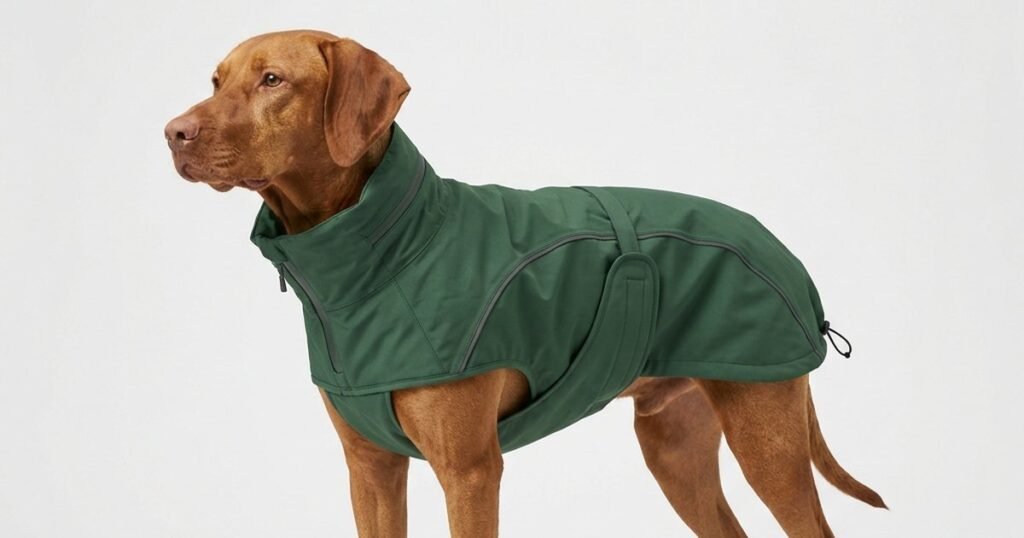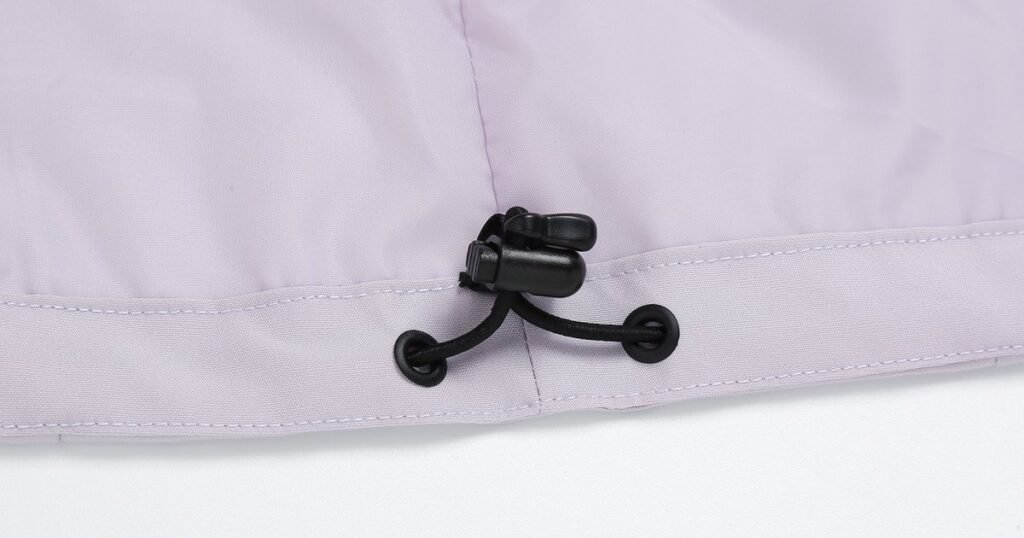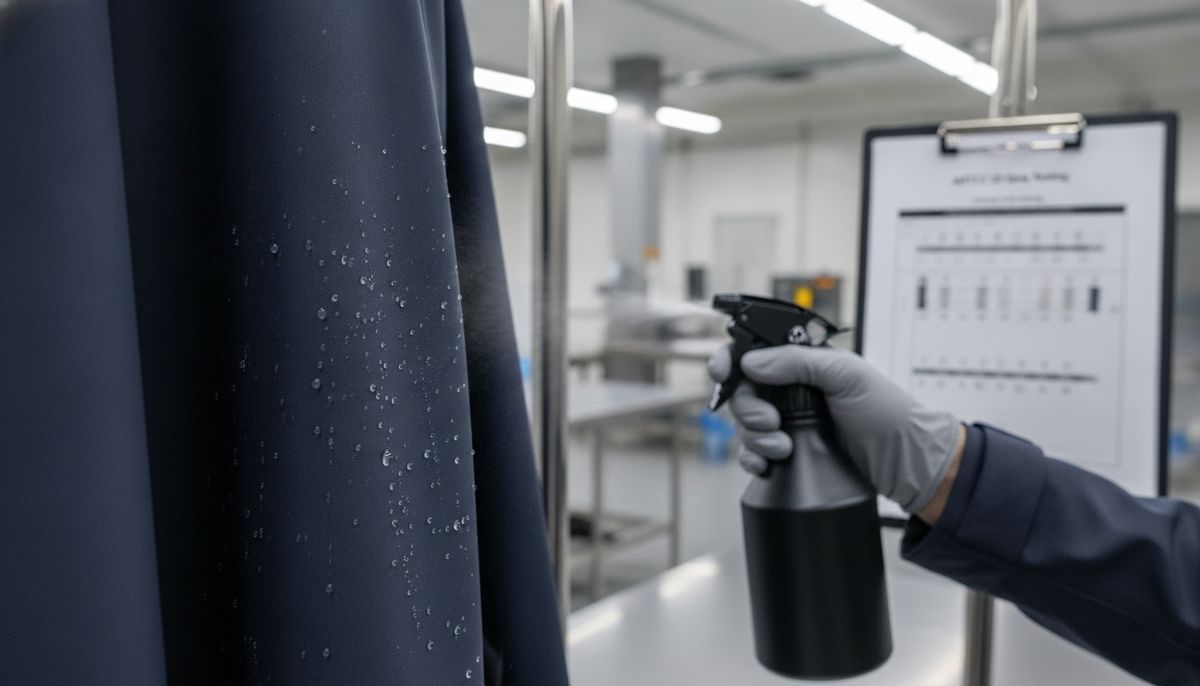
A C0 DWR coating jacket factory REACH certified provides fluorine-free water repellency alongside Article 33 SVHC declarations, Annex XVII testing, and ISO/IEC 17025 laboratory reports for every production batch. Certification requires independent third-party verification of both the DWR chemistry and the finished garment, not just a chemical supplier’s formulation certificate. PTOUTWEAR maintains batch-level C0 DWR documentation, ISO 9001 and SGS certification, with sample MOQ of 1 piece and bulk MOQ of 10 pieces per style.
📋 Table of Contents
Key Takeaways
- C0 DWR chemistry contains zero fluorocarbon atoms, eliminating PFAS while maintaining initial water repellency comparable to traditional C6 and C8 finishes.
- REACH compliance for jackets requires Article 33 SVHC declarations when Candidate List substances exceed 0.1% by weight in any article component.
- A factory certificate of analysis for C0 DWR chemistry does not prove that every production batch applied the certified formulation correctly or at the specified concentration.
- Independent laboratory wash testing typically measures AATCC 22 spray ratings after 20 commercial laundering cycles to verify durability claims.
- Batch-level traceability links each production lot to incoming fabric test reports, DWR application records, and finished-garment laboratory verification.
- PTOUTWEAR maintains ISO 9001 and SGS certification, with C0 DWR batch documentation available for sample orders starting at 1 piece and bulk orders from 10 pieces per style.
Executive Summary
- C0 DWR chemistry: Fluorine-free water-repellent finishes eliminate PFAS while delivering initial spray ratings of 90-100 on the AATCC 22 scale, though wash durability typically trails C6 chemistry by 5-10 cycles.
- REACH Article 33: Suppliers must declare any SVHC substance above 0.1% by weight in jackets, zippers, labels, or other article components, with updates each time the Candidate List expands.
- Batch traceability gap: Many factories provide a single laboratory report for an initial sample but lack documented proof that subsequent production batches used the same C0 formulation and application parameters.
- Independent verification: ISO/IEC 17025 accredited laboratories test incoming fabric, applied DWR, and finished garments separately, ensuring compliance at each production stage rather than relying on chemical-supplier certificates alone.
- Wash-durability evidence: Buyers increasingly request post-production AATCC 22 testing after 20 laundering cycles to confirm that C0 DWR maintains Grade 4.0 or higher spray ratings in real-world use.
What C0 DWR REACH Certification Means
C0 DWR certification confirms fluorine-free chemistry. REACH certification proves compliance with EU chemical restrictions. A C0 DWR coating jacket factory REACH certified combines both, but the two certifications cover different scopes and require separate documentation.
C0 DWR Chemistry Definition
C0 durable water repellent finishes contain zero fluorocarbon atoms in the polymer backbone. Traditional C6 and C8 chemistries use perfluorinated side chains to achieve low surface energy, creating strong water repellency. C0 alternatives rely on hydrocarbon or silicone-based polymers, delivering initial performance close to fluorinated finishes but with reduced environmental persistence. According to Sports Outlines (2026), one supplier reports that C0 DWR achieves an initial AATCC 22 spray rating of 100 and Grade 4.0 after 20 commercial laundering cycles. The chemistry eliminates PFAS, PFOA, and PFOS, addressing California AB 1817 and EU REACH Annex XVII restrictions on per- and polyfluoroalkyl substances.
REACH Compliance Scope
REACH regulation applies to all articles placed on the EU market. Article 33 requires suppliers to communicate SVHC information when a Candidate List substance exceeds 0.1% by weight in any article. Annex XVII restricts specific substances, including PFOA and its salts above 25 ppb, and PFOA-related compounds above 1,000 ppb. A jacket is a complex article containing fabric, zippers, labels, snaps, and drawcords. Each component requires separate SVHC screening. A factory claiming REACH compliance must provide documentation for every input material, not just the shell fabric or DWR finish.
Why Both Certifications Matter
C0 chemistry addresses the DWR finish. REACH compliance addresses the entire garment. A factory may apply certified C0 DWR to fabric containing restricted flame retardants in the membrane laminate, failing REACH despite fluorine-free water repellency. Conversely, a REACH-compliant jacket using C6 DWR fails California and EU fluorine-free requirements. Buyers sourcing for Germany, France, or other EU markets need both certifications independently verified and documented at the batch level.
Factory Documentation Requirements
Documentation separates verified compliance from marketing claims. A C0 DWR coating jacket factory REACH certified provides specific reports, not general capability statements.
Chemical Supplier Certificate of Analysis
The DWR chemical supplier issues a certificate of analysis confirming C0 formulation. This document specifies fluorine content (typically reported as <20 ppm by FTIR or XRF testing), active ingredient concentration, and recommended application parameters. The certificate proves the chemistry is fluorine-free. It does not prove the factory applied it correctly or at the specified concentration. Buyers should request the supplier name, product code, and batch number, then verify the certificate directly with the chemical manufacturer.
Fabric Incoming Inspection Report
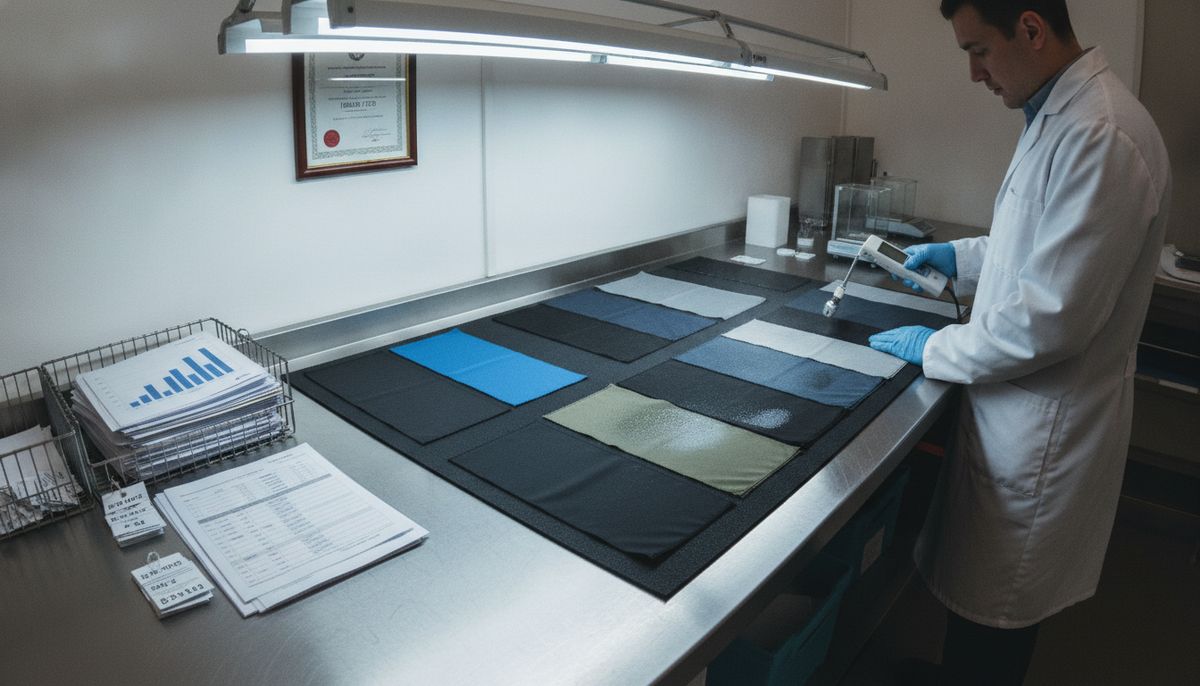
Fabric arrives at the factory pre-treated or untreated. If pre-treated, the mill provides a DWR application report showing chemistry type, bath concentration, curing temperature, and dwell time. If untreated, the factory applies DWR in-house and generates its own application log. An ISO/IEC 17025 laboratory tests a sample from each fabric lot for initial spray rating, typically targeting AATCC 22 Grade 4.5 to 5.0 before garment construction. This incoming test establishes a baseline. Any drop in performance during cut-and-sew or finishing points to process contamination or inadequate curing.
Article 33 SVHC Declaration
The factory compiles SVHC declarations from every component supplier: fabric mill, zipper manufacturer, label printer, snap supplier, drawcord vendor. Each declaration states whether any Candidate List substance exceeds 0.1% by weight. The factory consolidates these into a single garment-level declaration, updated whenever the REACH Candidate List expands. According to PTOUTWEAR (2026), REACH Candidate List substances generally require an Article 33 declaration when present above 0.1% by weight in an article. Buyers should verify that the declaration date matches or postdates the most recent Candidate List update, currently published twice per year by the European Chemicals Agency.
Annex XVII Test Report
Annex XVII restricts specific substances by concentration. For PFOA, the limit is 25 ppb in the substance or mixture, and 1,000 ppb for PFOA-related compounds. An accredited laboratory extracts and analyzes the finished garment using LC-MS/MS or GC-MS. The test report lists detected concentrations for each restricted substance. A non-detect result or a concentration below the Annex XVII limit confirms compliance. A factory claiming REACH certification must provide this report for a representative sample from each production batch, not just the initial development sample.
Batch Traceability Verification
Traceability links each production lot to its documentation. Without it, a factory can show compliant test reports from one batch while shipping non-compliant goods from another.
Fabric Lot Numbering
Each fabric roll carries a mill-assigned lot number. The factory logs this number during incoming inspection and links it to the laboratory test report for that lot. When the fabric enters cutting, the cut ticket references the lot number. When the garment reaches final inspection, the QC record traces back to the original fabric lot. Buyers should request the fabric lot number for their order and verify that the incoming test report matches that lot, not a generic sample from a different production run.
DWR Application Records
If the factory applies DWR in-house, the application log records bath concentration, curing temperature, dwell time, and fabric lot number for each batch. If the fabric arrives pre-treated, the mill provides equivalent data. Either way, the record proves which chemistry was applied and at what parameters. A factory claiming C0 DWR coating jacket factory REACH certified status must show application records for every production batch, not just a single validation run during sampling.
Garment-Level Laboratory Testing
A representative sample from each production lot undergoes final testing. The laboratory measures spray rating, confirms fluorine content below detection limits, and screens for Annex XVII restricted substances. The test report lists the garment lot number, production date, and fabric lot number, creating a traceable link from raw material to finished product. Buyers placing repeat orders should request a fresh test report for each new production batch, not rely on a report from the initial sample order.
Factories with traceability systems generate batch-specific reports automatically. Those without traceability rely on periodic spot checks, leaving gaps where non-compliant batches can ship undetected. Buyers should ask how many garments one test report covers and whether the factory tests every production lot or samples statistically.
Wash Durability Testing
Initial spray ratings measure performance before use. Wash durability measures performance after laundering, the condition buyers and end-users experience.
AATCC 22 Test Method
AATCC 22 sprays 250 mL of water onto a fabric sample from a fixed height, then grades water repellency on a 0-100 scale. Grade 100 indicates complete beading with no wetting. Grade 90 indicates slight random sticking. Grade 80 indicates partial wetting. Grades below 70 indicate wetting over most of the surface. Buyers typically specify a minimum Grade 90 for initial testing and Grade 70-80 after 20 home or commercial laundering cycles. C0 DWR generally achieves Grade 90-100 initially but drops faster than C6 chemistry after repeated washing.
Laundering Protocol
AATCC 135 defines home laundering conditions: 49°C water, 0.15% detergent, normal agitation, tumble dry. ISO 6330 defines similar parameters for European testing. Commercial laundering uses higher temperatures and stronger detergents, accelerating DWR degradation. According to PTOUTWEAR (2026), PFC-free DWR can maintain performance for 15-20 wash cycles when correctly applied and cured. Buyers sourcing workwear or school uniforms should specify commercial laundering protocols to match real-world use. Outdoor brands targeting retail consumers can use home laundering protocols.
Post-Wash Spray Rating Targets
A factory claiming durable C0 DWR should provide post-wash test data, not just initial ratings. Typical targets are Grade 90 or higher after 10 washes, Grade 80 or higher after 20 washes. Factories without post-wash data cannot verify durability claims. Buyers should request AATCC 22 testing after 20 cycles as part of the pre-production approval process, using a sample from the actual production fabric lot rather than a development swatch.
Supplier Screening Checklist
Screening a C0 DWR coating jacket factory REACH certified requires verifying documentation, not accepting capability claims.
Request Specific Documents Before Sampling
Ask the factory to provide the following before placing a sample order:
- Chemical supplier certificate: Confirms C0 formulation with fluorine content below 20 ppm, including supplier name and product code.
- Recent Annex XVII test report: Shows PFOA and PFOA-related compounds below legal limits, tested within the past 12 months by an ISO/IEC 17025 laboratory.
- Article 33 SVHC declaration: Lists all garment components with SVHC disclosure, dated after the most recent Candidate List update.
- Fabric incoming test report: Demonstrates initial spray rating and hydrostatic head for a recent production lot, not a generic capability sample.
- Post-wash durability data: AATCC 22 spray ratings after 10, 20, and 30 laundering cycles using the specified protocol.
Verify Laboratory Accreditation
Test reports should come from ISO/IEC 17025 accredited laboratories. The accreditation scope must include the specific test methods cited in the report. Buyers can verify accreditation by checking the laboratory name against national accreditation body registers such as CNAS (China), UKAS (United Kingdom), or A2LA (United States). Factories using non-accredited in-house labs cannot provide independent verification.
Check Batch Traceability During Factory Audit
If possible, visit the factory or hire a third-party auditor to verify traceability systems. Check that fabric lot numbers appear on incoming inspection logs, cut tickets, and final QC records. Ask to see DWR application logs showing bath concentration and curing parameters for recent production batches. Confirm that garment lot numbers link back to fabric lot numbers and laboratory test reports. Factories with strong traceability can produce this documentation within minutes. Those without traceability cannot.
Request Batch-Specific Testing for Your Order
Specify in the purchase order that the factory must test a sample from your production batch and provide the report before shipment. The report should list your order number, production date, fabric lot number, and garment lot number. This ensures the test covers your goods, not a different batch. Buyers placing small orders may face resistance because testing costs $200-500 per sample. Offering to cover the test cost or building it into the unit price resolves this objection.
PTOUTWEAR C0 DWR REACH Compliance
PTOUTWEAR maintains batch-level C0 DWR documentation and REACH compliance records for all OEM jacket manufacturing orders. Our 3,000m² Taizhou Sanmen facility runs 20 production lines with in-house cut-and-sew and QC, producing softshell, hardshell, rain, ski, insulated, windbreaker, 3-in-1, workwear, and varsity jackets.
C0 DWR Application and Testing
We apply C0 DWR chemistry from verified suppliers with fluorine content below 20 ppm. Incoming fabric undergoes AATCC 22 spray testing to confirm Grade 4.5 or higher before cutting. Finished garments are tested again after construction to verify that spray rating remains above Grade 4.0. Post-wash durability testing follows AATCC 135 home laundering protocols, targeting Grade 4.0 after 20 cycles. Test reports include fabric lot numbers, production dates, and garment lot numbers for full traceability.
REACH Documentation
We compile Article 33 SVHC declarations from all component suppliers and update them each time the REACH Candidate List expands. Annex XVII testing for PFOA and related compounds is conducted by ISO/IEC 17025 accredited laboratories. Test reports confirm concentrations below 25 ppb for PFOA and 1,000 ppb for PFOA-related compounds. Buyers receive batch-specific documentation for every order, not generic capability certificates.
Low-MOQ Sampling and Production
Sample MOQ is 1 piece with a $100 sample fee, refunded against a first bulk order of 30 or more pieces. Bulk MOQ is 10 pieces per style, with colors and sizes mixed. School and corporate uniform programs start at 30 pieces per style per color. Sampling time is 7-10 days. Bulk production takes 25-35 days. Rush orders of 1,000 pieces can be completed in 2 weeks at a 25% surcharge. DDP shipping is available. Buyers can request sample development with full C0 DWR and REACH documentation before committing to bulk production.
Certifications and Quality Systems
PTOUTWEAR holds ISO 9001 and SGS certification. OEKO-TEX, BSCI, GRS, and bluesign certifications are pending, not yet held. Our quality system tracks fabric lot numbers, DWR application parameters, and final test results for every production batch. Buyers placing repeat orders receive updated test reports for each new lot, ensuring consistent compliance across all shipments. For low-MOQ jacket manufacturing, we provide the same documentation rigor as high-volume orders.
Frequently Asked Questions
Is C0 DWR the same as PFAS-free?
C0 DWR is fluorine-free, meaning it contains zero fluorocarbon atoms in the polymer structure. PFAS-free is a broader term covering per- and polyfluoroalkyl substances, including C6, C8, PFOA, and PFOS. All C0 DWR is PFAS-free, but not all PFAS-free claims guarantee C0 chemistry. Some suppliers use C4 or short-chain fluorinated polymers and label them PFAS-free under specific definitions. Buyers should request fluorine content testing below 20 ppm by FTIR or XRF to confirm true C0 formulation, not rely on marketing language alone.
How long does C0 DWR last after washing?
C0 DWR typically maintains AATCC 22 spray ratings of Grade 4.0 or higher for 15-20 home laundering cycles when correctly applied and cured. Performance depends on bath concentration, curing temperature, fabric type, and detergent strength. Commercial laundering at higher temperatures accelerates degradation, reducing effective life to 10-15 cycles. C6 DWR generally lasts 5-10 cycles longer under the same conditions. Buyers should specify post-wash testing after 20 cycles during pre-production approval to verify durability claims match real-world use.
What certificates should a jacket factory provide for REACH compliance?
A REACH-compliant jacket factory provides Article 33 SVHC declarations from every component supplier, Annex XVII test reports from an ISO/IEC 17025 accredited laboratory showing restricted substances below legal limits, and batch traceability records linking each production lot to its documentation. The factory should also supply chemical supplier certificates for DWR and other finishes, incoming fabric test reports, and garment-level laboratory verification for each production batch. Generic capability statements or outdated test reports from different production runs do not constitute compliance proof.
Ready to source C0 DWR jackets with verified REACH compliance and batch-level documentation?
Request 1-piece samples with full test reports →
Written by Ivan Chen, Sales Engineer at PTOUTWEAR, 13 years in outdoor apparel manufacturing.