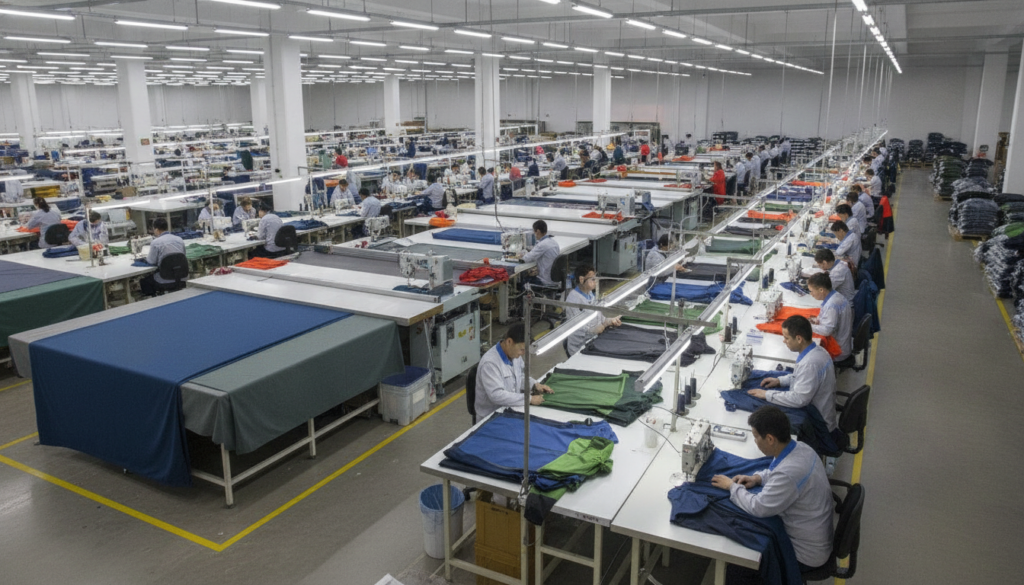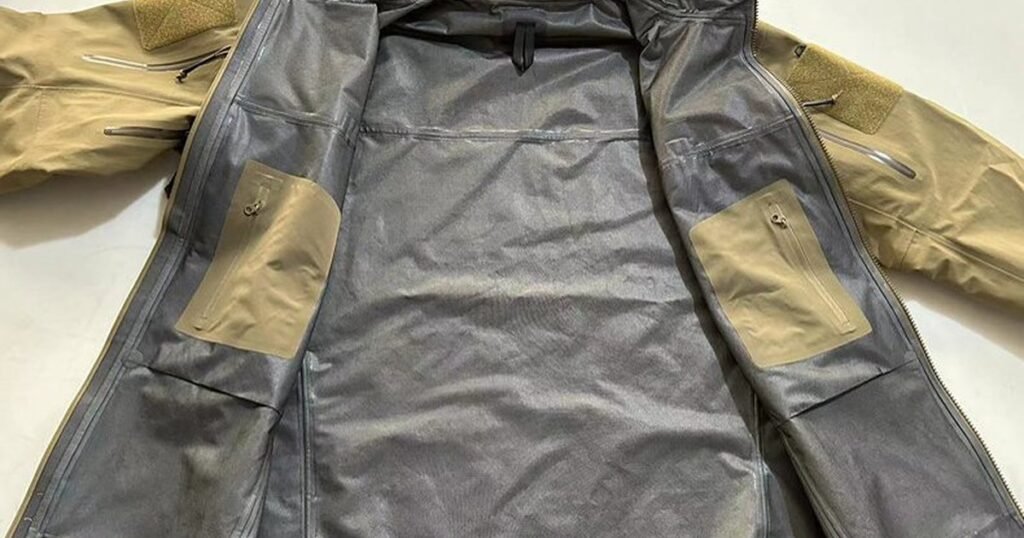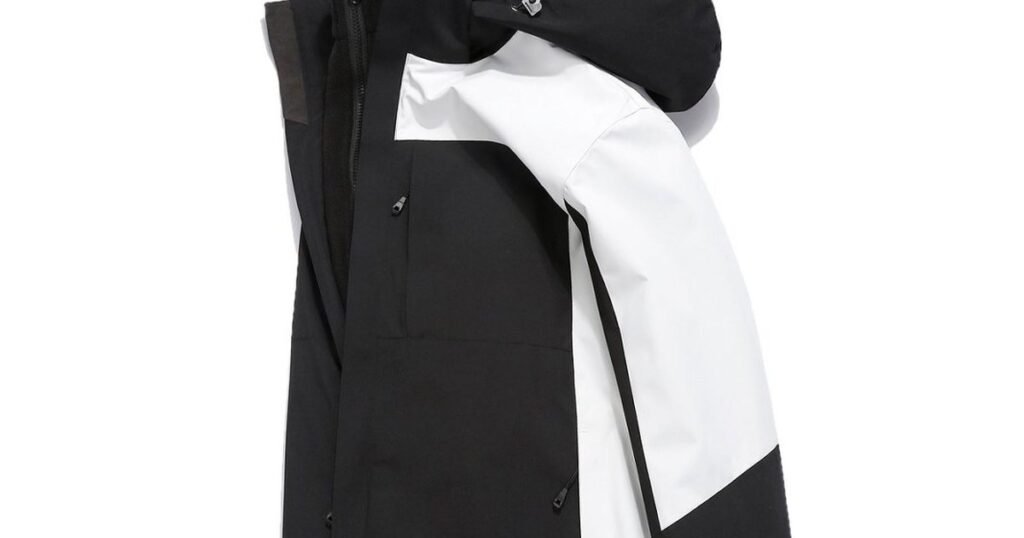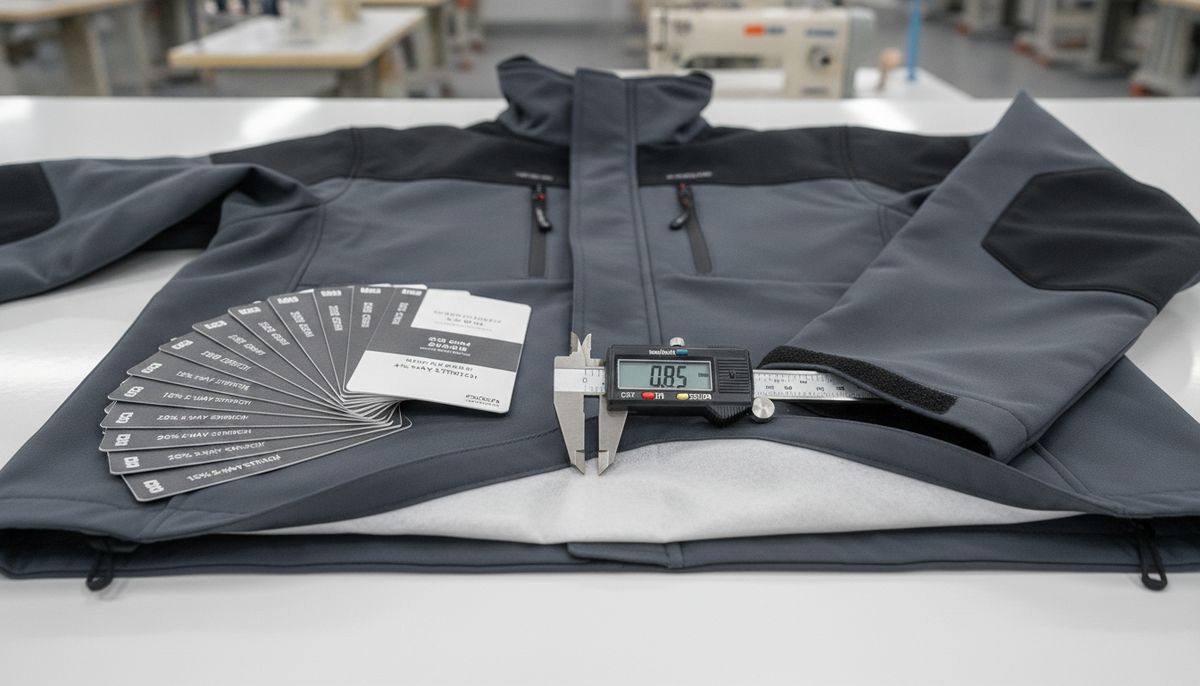
When requesting a custom softshell jacket quote, you must specify fabric composition (typically polyester or nylon blend), GSM weight (240-350 GSM for most applications), stretch percentage (10-40% four-way stretch), DWR treatment type (PFC-free or standard), membrane presence (TPU, ePTFE, or none), lining material (micro-fleece, mesh, or brushed tricot), colorways, size range, trim details (zippers, cuffs, hem), branding placement, MOQ, and delivery destination. Manufacturers cannot price accurately without these nine fabric and construction parameters. At PTOUTWEAR’s 3,000m² Taizhou Sanmen facility, we run 1-piece sample development in 7-10 days so brands can validate fabric performance before committing to a 10-piece bulk minimum.
📋 Table of Contents
Executive Summary
- Fabric composition: Polyester or nylon blends dominate softshell construction, often with elastane for stretch; specify the exact fiber ratio to control cost and performance.
- GSM and stretch: Most softshells range from 240 to 350 GSM; lighter fabrics breathe better but sacrifice wind resistance, while heavier fabrics add warmth and durability at the cost of weight.
- DWR and membrane: DWR-only shells resist light rain but wet out in sustained weather; adding a TPU or ePTFE membrane raises waterproofness and cost.
- MOQ and lead time: Sample MOQ at PTOUTWEAR is 1 piece with a 7-10 day turnaround; bulk production starts at 10 pieces per style with a 25-35 day lead time.
- Compliance and testing: United States, European Union, United Kingdom, Canada, and Australia each impose distinct chemical restrictions, labeling formats, and testing protocols that affect fabric sourcing and documentation.

Fabric Composition and Construction
Softshell fabric composition determines stretch, breathability, durability, and cost. Most manufacturers offer three base constructions, each suited to a different end use and price point.
Stretch-Woven Polyester or Nylon
Polyester blends cost less and dry faster than nylon, making them the default for corporate uniforms and school programs. Nylon blends offer higher abrasion resistance and a softer hand, preferred by DTC outdoor brands targeting trail running and alpine touring. Specify the exact fiber ratio (e.g., 92% polyester / 8% elastane) to control stretch recovery and cost. A higher elastane percentage increases four-way stretch but raises fabric cost by 15-25% compared to two-way stretch constructions.
Membrane vs. Membrane-Free Construction
Membrane-free softshells rely on a tight weave and DWR treatment for water resistance, keeping the fabric breathable and the price low. Adding a TPU or ePTFE membrane between the face and lining raises waterproofness from 3,000-5,000 mm to 10,000-15,000 mm but reduces breathability and adds $4-8 per jacket at the 100-piece tier. Buyers often assume a softshell is waterproof when it is only water-resistant, leading to complaints about seam leakage and wet-out during prolonged rain. Specify whether you need a membrane, and if so, which type and thickness.
Lining Material
Micro-fleece lining adds warmth and next-to-skin comfort, making it the standard for cold-weather corporate jackets and ski shells. Mesh lining reduces weight and improves breathability for high-output activities like trail running and cycling. Brushed tricot offers a middle ground, balancing warmth and moisture transport. Lining weight ranges from 100 GSM (lightweight mesh) to 200 GSM (heavyweight fleece); specify the exact GSM to control warmth and bulk.
Performance Ratings: Waterproofness and Breathability
Waterproofness and breathability are measured by standardized lab tests, but manufacturers often quote aspirational figures rather than third-party test results. Request test reports before approving a fabric, not after bulk production.
Hydrostatic Head (Waterproofness)
Hydrostatic head measures how much water pressure a fabric can withstand before leaking, expressed in millimeters. A 5,000 mm rating handles light rain and snow; 10,000 mm handles moderate rain; 20,000 mm handles prolonged heavy rain and wet snow. The test method is ISO 811 or AATCC 127, and results can vary by 10-15% depending on lab calibration and fabric tension during testing. Specify which test standard you require and whether you need third-party certification or mill self-test data.
Moisture Vapor Transmission Rate (Breathability)
MVTR measures how much water vapor passes through the fabric in 24 hours, expressed in grams per square meter per 24 hours (g/m²/24h). A rating of 3,000-5,000 g/m²/24h suits low-intensity wear like corporate uniforms; 8,000-12,000 g/m²/24h suits moderate activity like hiking; 15,000+ g/m²/24h suits high-output activity like trail running and alpine touring. The test method is ASTM E96 or ISO 15496, and results vary widely depending on temperature and humidity settings. Some manufacturers quote inverted-cup results (higher numbers) rather than upright-cup results (lower, more conservative numbers), inflating breathability claims by 30-50%.
DWR Treatment Type
Durable Water Repellent (DWR) treatment causes water to bead and roll off the fabric surface rather than soaking in. PFC-based DWR (C8 and C6 chemistries) delivers the strongest water repellency and longest durability but is restricted or banned in the European Union, United Kingdom, Canada, and several United States states. PFC-free DWR (wax-based or silicone-based) complies with global chemical restrictions but requires more frequent reapplication and loses effectiveness faster in sustained rain. PTOUTWEAR applies PFC-free DWR as the default; specify if you need a different chemistry and confirm it meets your target market’s chemical regulations.
In practice: A jacket that passes a 5,000 mm hydrostatic-head test in the lab can still leak through unfinished seams or low-quality zipper tape, which is why seam taping and zipper-tape waterproofness get checked on the pre-production sample before bulk cutting starts.
Stretch, Weight, and Warmth Specifications
Stretch percentage, fabric weight, and lining type combine to determine how a softshell fits, moves, and insulates. Specify all three to avoid a mismatch between your brand positioning and the finished garment.
Stretch Percentage and Direction
Two-way stretch (horizontal only) costs less and suits loose-fit corporate jackets and school uniforms. Four-way stretch (horizontal and vertical) adds 15-25% to fabric cost but improves mobility for athletic fits and high-output activities. Stretch percentage ranges from 10% (minimal give) to 40% (high elasticity). Specify the exact percentage and direction, and request a fabric swatch to confirm hand feel and recovery before approving the bulk order.
Fabric Weight (GSM)
GSM (grams per square meter) measures fabric thickness and weight. Lightweight softshells (240-280 GSM) breathe well and pack small, making them ideal for trail running, cycling, and spring hiking. Midweight softshells (280-320 GSM) balance warmth and breathability for corporate uniforms and casual outdoor wear. Heavyweight softshells (320-350 GSM) add wind resistance and warmth for ski jackets and cold-weather work wear, but sacrifice packability and breathability. Specify the target GSM range and confirm whether the quoted weight includes lining or face fabric only.
Warmth and Insulation
Softshells are not insulated jackets; warmth comes from lining type, fabric thickness, and wind resistance rather than down or synthetic fill. A micro-fleece lining at 180-200 GSM adds noticeable warmth without bulk, suitable for temperatures down to 5°C (41°F) with a base layer. Mesh lining offers minimal warmth and maximizes breathability for high-output activity. Brushed tricot sits in the middle. Specify the lining GSM and fiber content (polyester fleece, nylon mesh, or blended tricot) to control warmth and moisture transport.
- Lightweight (240-280 GSM): High breathability, minimal warmth, suited to spring and fall hiking, trail running, and cycling.
- Midweight (280-320 GSM): Balanced warmth and breathability, suited to corporate uniforms, casual outdoor wear, and moderate hiking.
- Heavyweight (320-350 GSM): Maximum wind resistance and warmth, suited to ski jackets, cold-weather work wear, and alpine touring.
Trim, Branding, and Construction Details
Zippers, cuffs, hem adjusters, pockets, and branding placement affect both cost and performance. Specify every trim detail in the initial quote request to avoid repricing and delays later.
Zipper Specification
YKK zippers cost 20-30% more than generic alternatives but offer consistent pull strength, corrosion resistance, and warranty support. Specify the zipper brand (YKK, SBS, or generic), size (No. 5 for center-front, No. 3 for pockets), type (coil, vislon, or metal), and whether you need waterproof zipper tape or standard tape. Waterproof zipper tape adds $1-2 per jacket at the 100-piece tier but eliminates a common leak point in membrane-equipped shells.
Cuff and Hem Design
Elastic cuffs with Velcro tabs offer the best wind seal and fit adjustment for outdoor performance. Knit cuffs cost less and suit corporate uniforms where wind sealing is secondary. Adjustable hem with shock cord and cord locks allows the wearer to cinch the jacket for warmth or loosen it for ventilation. Specify cuff style (elastic, knit, or neoprene), hem style (adjustable or fixed), and whether you need internal or external cord locks.
Pocket Construction and Placement
Hand-warmer pockets with YKK zippers are the baseline for outdoor softshells. Chest pockets add functionality for ski passes, phones, and GPS units but raise cut-and-sew cost by $0.50-1.00 per jacket. Internal pockets add security for passports and wallets. Specify pocket count, placement (hand-warmer, chest, internal), zipper type, and whether you need waterproof pocket bags or standard mesh.
Branding and Logo Placement
Embroidery offers the most durable branding but costs $1.50-3.00 per placement depending on stitch count and thread colors. Heat-transfer logos cost less ($0.50-1.00 per placement) but may peel or crack after repeated washing. Woven labels sewn into seams add subtle branding at $0.20-0.40 per label. Specify logo placement (left chest, right chest, sleeve, back yoke), size, method (embroidery, heat transfer, or woven label), and thread or film colors. PTOUTWEAR offers custom logo services with digitizing included for orders of 30 pieces or more.
MOQ, Pricing, and Commercial Terms
Minimum order quantities, sample fees, payment terms, and shipping methods vary widely across manufacturers. Clarify every commercial term before requesting a quote to avoid surprises later.
Sample MOQ and Fees
Sample MOQ at PTOUTWEAR is 1 piece per style with a $100 sample fee, refunded against a first bulk order of 30 pieces or more. Sampling time is 7-10 days from fabric and trim approval. Some manufacturers charge $200-300 per sample and require a 3-piece minimum, tying up cash before market validation. Confirm the sample fee, refund threshold, and turnaround time in the initial quote request.
Bulk MOQ and Price Breaks
Bulk MOQ at PTOUTWEAR is 10 pieces per style, with colors and sizes mixed. School and corporate uniform programs start at 30 pieces per style per color. Price breaks typically occur at 100, 300, 500, and 1,000 pieces per style. Expect a 10-15% price reduction at 100 pieces, 15-20% at 300 pieces, and 20-25% at 500 pieces compared to the 10-piece tier. Request a tiered pricing table in the initial quote to plan inventory and cash flow.
Payment Terms and Deposits
Standard payment terms are 30% deposit upon order confirmation, 70% balance before shipment. Some manufacturers offer net-30 or net-60 terms for repeat customers or orders above $10,000. Confirm payment terms, accepted currencies (USD, EUR, GBP), and whether the manufacturer accepts PayPal, wire transfer, or letter of credit.
Shipping and Landed Cost
FOB (Free on Board) pricing excludes international shipping, customs duties, and import taxes; the buyer arranges and pays for logistics. DDP (Delivered Duty Paid) pricing includes shipping, duties, and taxes to the buyer’s warehouse or fulfillment center. DDP simplifies budgeting and avoids customs surprises but adds 15-25% to the FOB price depending on destination and order value. Specify your preferred Incoterm and delivery destination in the quote request to get an accurate landed-cost estimate.
Sample MOQ: 1 piece. Bulk MOQ: 10 pieces per style (mix colors and sizes). Sampling time: 7-10 days. Bulk lead time: 25-35 days.
Compliance, Testing, and Documentation
Chemical restrictions, labeling requirements, and testing protocols vary by target market. Specify your compliance needs in the initial quote request to avoid costly rework or shipment delays later.
United States Compliance
The United States does not mandate third-party testing for softshell jackets, but California Proposition 65 restricts lead, cadmium, phthalates, and PFAS in textiles. Retailers like REI, Patagonia, and The North Face often require OEKO-TEX Standard 100 or bluesign certification to ensure compliance. Specify whether you need California Prop 65 compliance, OEKO-TEX certification, or CPSIA testing for children’s jackets.
European Union and United Kingdom Compliance
REACH Annex XVII restricts PFAS, azo dyes, and heavy metals in textiles sold in the European Union and United Kingdom. All garments must carry CE marking and a Declaration of Conformity. Specify whether you need REACH compliance testing, CE marking, and a Declaration of Conformity in English or the local language of your target market.
Canada and Australia Compliance
Canada requires bilingual labeling (English and French) and compliance with the Textile Labelling Act and the Canada Consumer Product Safety Act. Australia requires care-label compliance with AS/NZS 1957 and fiber-content labeling in English. Specify labeling language, care-label format, and whether you need third-party testing for restricted chemicals.
Testing Reports and Certifications
Request copies of fabric test reports (hydrostatic head, MVTR, abrasion resistance, colorfastness) and mill certifications (OEKO-TEX, bluesign, GRS) before approving the bulk order. Some manufacturers quote certified fabrics but substitute untested alternatives during production to reduce cost. PTOUTWEAR holds ISO 9001, SGS, and PFC-Free DWR certifications; OEKO-TEX, BSCI, GRS, and bluesign are pending, not yet held.
Key Takeaways
- A complete custom softshell jacket quote requires fabric composition, GSM weight, stretch percentage, DWR treatment type, membrane presence, lining material, colorways, size range, trim details, branding placement, MOQ, and delivery destination.
- Polyester blends cost less and dry faster than nylon; nylon offers higher abrasion resistance and a softer hand, preferred by DTC outdoor brands.
- DWR-only shells resist light rain but wet out in sustained weather; adding a TPU or ePTFE membrane raises waterproofness from 3,000-5,000 mm to 10,000-20,000 mm and increases cost by $4-8 per jacket at the 100-piece tier.
- Sample MOQ at PTOUTWEAR is 1 piece with a 7-10 day turnaround; bulk MOQ is 10 pieces per style with a 25-35 day production lead time.
- United States buyers should specify California Prop 65 compliance; European Union and United Kingdom buyers need REACH compliance and CE marking; Canada requires bilingual labeling; Australia requires AS/NZS 1957 care labels.
- Request fabric test reports and mill certifications before approving the bulk order to confirm waterproofness, breathability, and chemical compliance match the quoted specifications.
Frequently Asked Questions
What is the difference between a two-layer and three-layer softshell jacket?
A two-layer softshell bonds the membrane to the face fabric, leaving the lining as a separate loose layer; this construction costs less and feels softer but adds bulk and weight. A three-layer softshell laminates the membrane between the face fabric and a thin protective backer, eliminating the need for a separate lining; this construction reduces weight and bulk, improves durability, and raises cost by $5-10 per jacket at the 100-piece tier. Three-layer shells are preferred for DTC outdoor brands targeting performance and packability, while two-layer shells suit corporate uniforms and casual outdoor wear where cost and comfort outweigh weight savings.
How do I verify a manufacturer’s fabric test reports are genuine?
Request the original test report PDF from the testing lab, not a summary or excerpt from the manufacturer. Genuine reports include the lab name, test standard (ISO 811, ASTM E96, AATCC 127), test date, sample identification, and lab contact information. Cross-check the lab name against accredited testing organizations like SGS, Intertek, Bureau Veritas, or TÜV. Contact the lab directly to confirm the report number and test date match their records. Some manufacturers circulate years-old test reports or reports from a different fabric lot; confirm the test date is within the past 12 months and the sample ID matches the fabric you approved.
Can I mix colors and sizes within the 10-piece minimum order quantity?
Yes, PTOUTWEAR allows color and size mixing within the 10-piece per style minimum for jackets and pants. You can order 3 pieces in black size M, 4 pieces in navy size L, and 3 pieces in gray size XL to reach the 10-piece threshold, as long as all pieces share the same style, fabric, and construction. School and corporate uniform programs start at 30 pieces per style per color to ensure consistent dye-lot matching across the order. Confirm color-mixing and size-mixing policies with your manufacturer before finalizing the purchase order, as some factories require a minimum quantity per color or per size to justify cutting and sewing setup costs.
Ready to request your custom softshell jacket quote with complete fabric specs?
Get Your Quote Now →
Written by Ivan Chen, Sales Engineer at PTOUTWEAR – 13 years in outdoor apparel manufacturing.