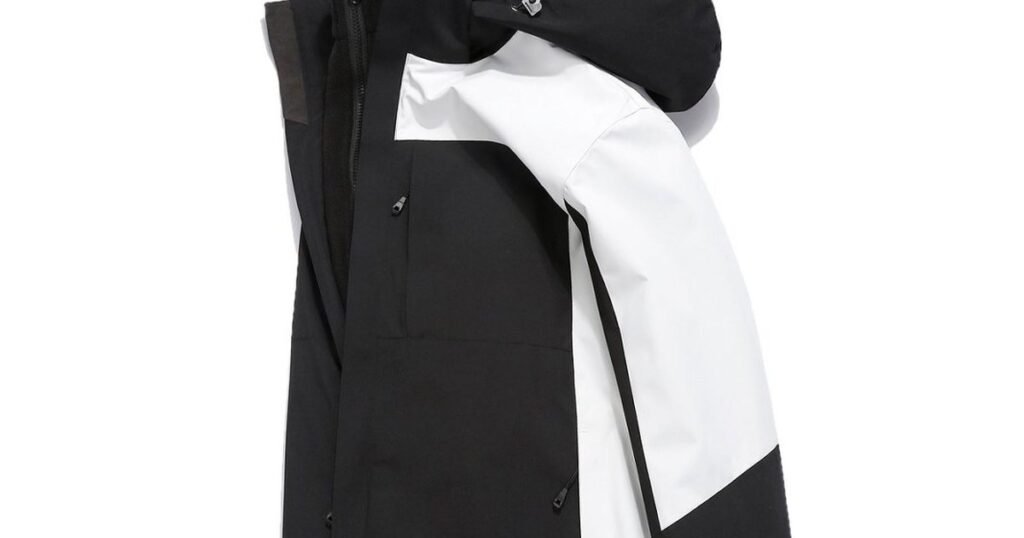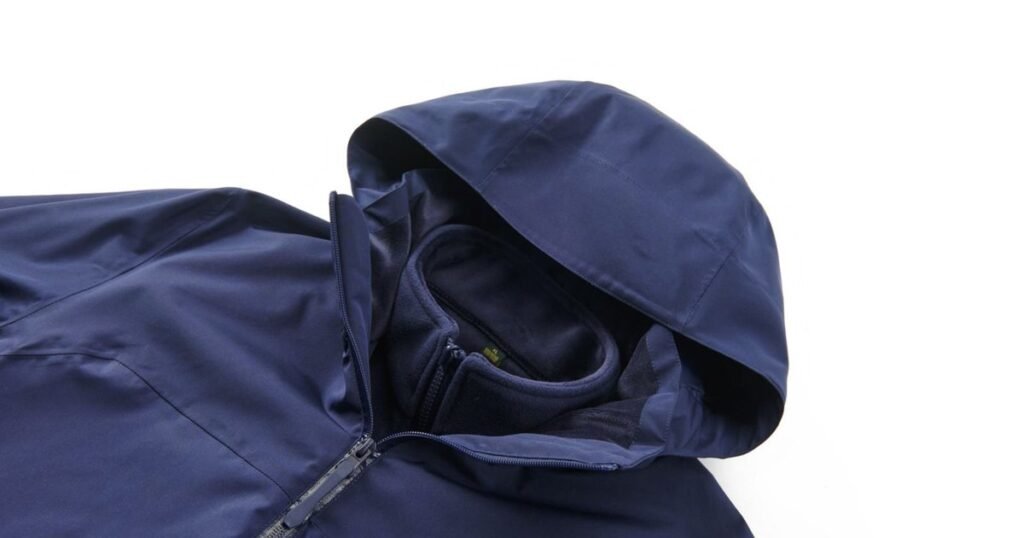
Custom jacket manufacturers produce tailored outerwear with specifications you define-fabric, fit, branding, and performance features-rather than offering fixed catalog designs. PTOUTWEAR’s sample MOQ is 1 piece with a $100 refundable fee, and bulk production starts at 30 pieces per SKU, enabling small outdoor brands to validate designs before committing large cash to inventory.
📋 Table of Contents
Executive Summary
- MOQ reality: Sample MOQ can be as low as 1 piece, while bulk production typically starts at 30 pieces per SKU for technical outerwear.
- Verification priority: Factory legitimacy, in-house QC systems, and third-party inspection access matter more than marketing claims or client lists.
- Certification baseline: ISO 9001 and SGS testing confirm process control; PFC-free DWR and OEKO-TEX address chemical safety for technical fabrics.
- Timeline planning: Sampling takes 7-10 days, bulk production 25-35 days after sample approval, with shipping adding 20-40 days depending on destination.
- Cost transparency: Custom work costs more than catalog items, but refundable sample fees and low bulk MOQ reduce upfront cash risk for new brands.
How Custom Jacket Manufacturing Works
Custom jacket manufacturing begins with your design brief-fabric type, fit specifications, branding placement, and performance requirements like waterproofing or insulation. The manufacturer translates that brief into a technical pack, sources materials, produces a pre-production sample, and after your approval, runs bulk production with in-line quality checks.
Design Brief and Tech Pack Development
You submit sketches, reference images, or existing samples alongside fabric preferences and performance targets. The factory’s pattern team converts this into a technical pack with graded measurements, construction details, and material callouts. PTOUTWEAR’s sample development team reviews specs for manufacturability before cutting the first sample, catching fit or seam-placement issues early.
Material Sourcing and Pre-Production Sample
The manufacturer sources fabrics, zippers, and trims based on your spec or suggests alternatives if your first choice is unavailable or cost-prohibitive. A pre-production sample is sewn to confirm fit, construction, and branding placement. This is your last chance to adjust before bulk production locks in the pattern.
Bulk Production and Quality Control
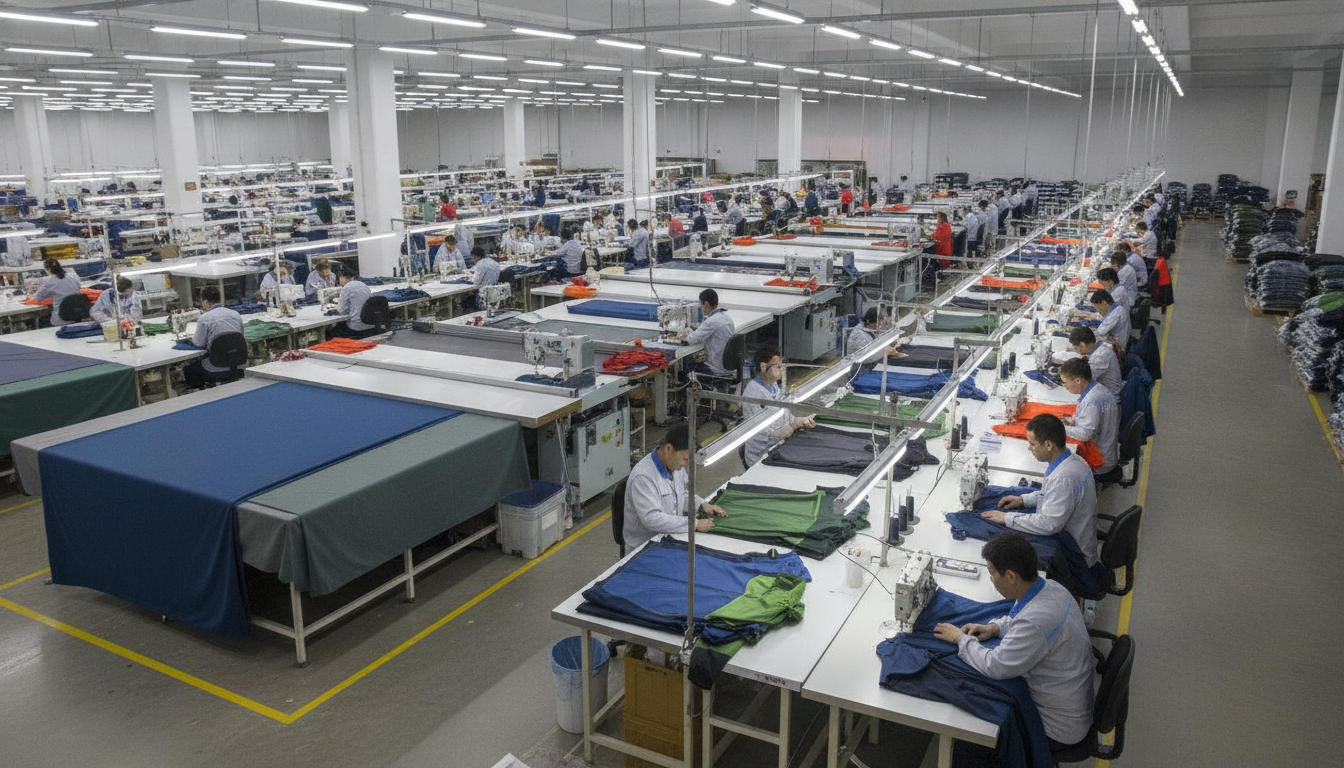
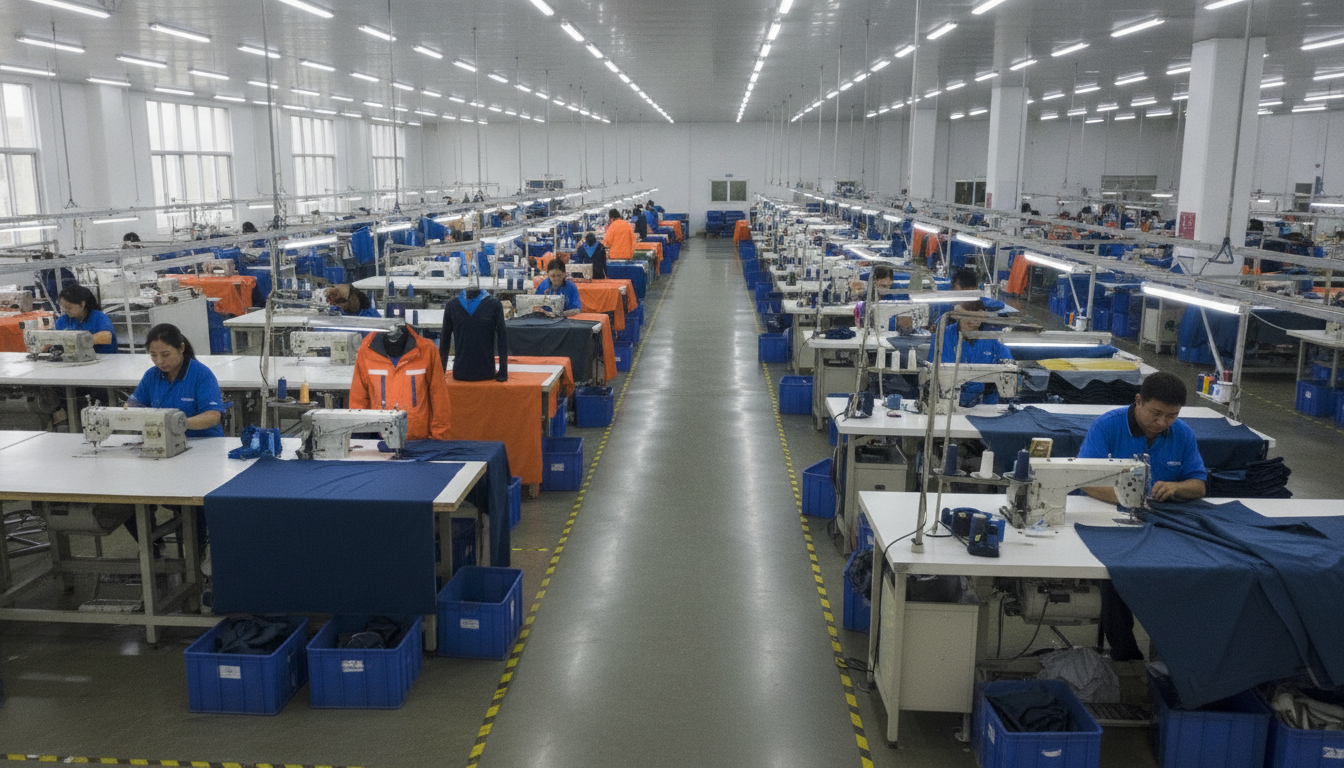
After sample approval, the factory cuts fabric for the full order, sews garments on dedicated production lines, and runs in-line QC checks at cutting, sewing, and packing stages. ISO 9001 certified facilities maintain documented inspection protocols at each stage, reducing defect rates below 2% for experienced manufacturers.
How Do You Verify a Manufacturer’s Quality Before Ordering?
Buyers face real risk when choosing custom jacket manufacturers: some sellers operate as brokers with no factory, others lack technical-fabric experience, and a few simply disappear after receiving deposits. Verification starts with factory proof, then moves to process documentation and third-party validation.
Factory Legitimacy: Business License and Facility Photos
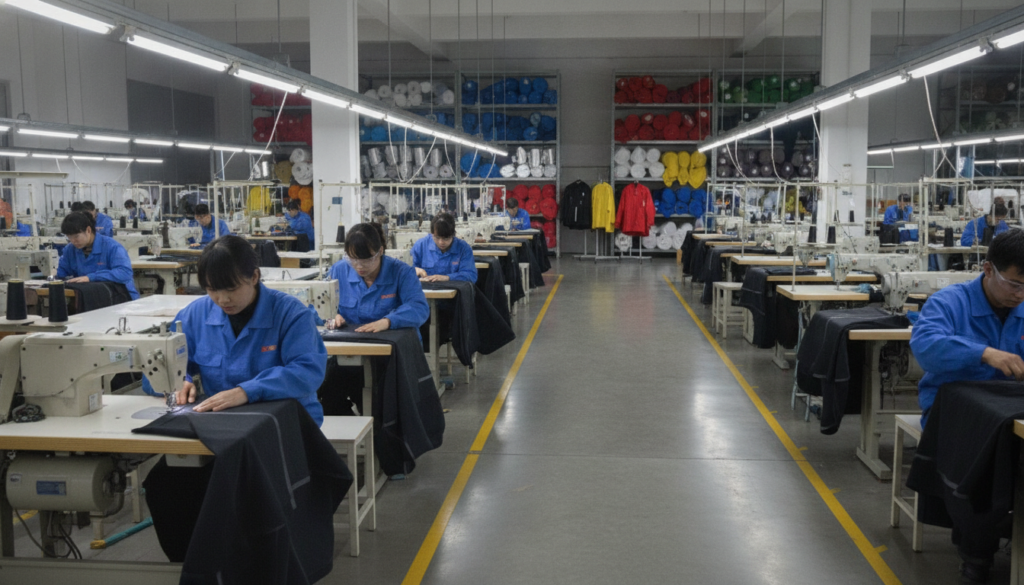
Request a current business license, export license, and dated factory-floor photos showing production lines, cutting tables, and QC stations. Shell companies cannot provide these. PTOUTWEAR’s 3,000m² facility in Taizhou Sanmen runs 20 production lines with 240 workers, and we share timestamped facility photos during initial inquiries.
Quality Control Systems and Inspection Access
Ask how the factory inspects garments during production, not just at final packing. ISO 9001 certification requires documented inspection at cutting, sewing, and finishing stages. Manufacturers confident in their process allow third-party inspectors during production, not just at final audit. Buyers who skip in-process inspection discover defects only after goods ship, when rework is impossible.
Sample Quality and Construction Details
Order a paid sample before committing to bulk. Examine seam sealing (are tape edges clean or lifting?), zipper alignment (does the pull catch fabric?), and fabric hand-feel (does the DWR coating feel sticky or smooth?). A manufacturer who rushes samples or resists revisions will cut corners during bulk production.
What MOQ and Sampling Process Should You Expect?
Minimum order quantity varies by manufacturer and jacket complexity. Technical outerwear with taped seams and waterproof zippers typically requires higher MOQ than basic windbreakers, because specialized machinery and skilled labor cannot efficiently switch between small batches. Understanding MOQ tiers and sampling costs helps you budget accurately.
Sample MOQ and Fees
Most custom jacket manufacturers charge for samples to cover fabric, labor, and pattern development. Sample fees range from $80 to $200 per piece depending on jacket complexity. PTOUTWEAR’s sample MOQ is 1 piece with a $100 fee, refundable against your first bulk order of 30+ pieces per SKU. This structure lets you validate fit and branding without committing to inventory.
Bulk Production MOQ
Bulk MOQ for technical jackets typically starts at 30-50 pieces per SKU for manufacturers with flexible production lines. Factories that specialize in large-brand contracts often require 500-1,000 pieces per style, which ties up significant cash for emerging brands. According to Eliian (2026), custom outdoor and sport jackets can be produced with a 10-piece minimum per design and delivered in 20-25 days after sample approval, though this applies to simpler constructions.
Sampling Timeline and Revision Rounds
Pre-production samples take 7-10 days after tech pack approval and material confirmation. If you request fit or construction changes, the manufacturer produces a revised sample, adding another 7-10 days. Brands that skip the revision round to save time often discover fit issues during bulk production, when changes require remaking the entire order.
Sample MOQ: 1 piece. Bulk MOQ: 30 pieces per SKU. Sampling time: 7-10 days. Bulk production: 25-35 days after sample approval.
Which Certifications and Compliance Documents Matter?
Certifications verify that a manufacturer follows documented processes and meets safety or environmental standards. Not all certifications carry equal weight, and some manufacturers display expired or irrelevant certificates to appear credible. Focus on certifications that directly address your product category and target market.
ISO 9001: Quality Management System
ISO 9001 certification confirms the factory maintains documented quality-control procedures, trains staff on those procedures, and conducts internal audits. It does not guarantee product quality, but it ensures the manufacturer follows a repeatable process. Request the current certificate and verify the expiration date and scope (some certificates cover only certain product lines).
OEKO-TEX Standard 100: Textile Chemical Safety
OEKO-TEX Standard 100 testing screens fabrics and trims for restricted substances including heavy metals, formaldehyde, and certain dyes. This certification matters for jackets with direct skin contact (linings, inner collars) and for brands selling in the EU, where chemical regulations are strict. The certificate applies to specific materials, not the entire factory, so request test reports for the fabrics in your jacket.
PFC-Free DWR: Water Repellency Without Fluorocarbons
PFC-free durable water repellent coatings avoid perfluorinated chemicals, which persist in the environment and bioaccumulate. Outdoor brands increasingly require PFC-free DWR to meet retailer sustainability standards and consumer expectations. PTOUTWEAR uses SGS-tested PFC-free DWR on all waterproof and water-resistant jackets, and we provide test reports showing fluorine content below detection limits.
BSCI and Social Compliance Audits
BSCI (Business Social Compliance Initiative) audits verify labor conditions, working hours, and workplace safety. Brands selling through major retailers or in the EU often require BSCI or equivalent audits (WRAP, SA8000). Request the most recent audit report and check the score; manufacturers with persistent non-conformances may face production delays or ethical-sourcing flags.
What Are Realistic Production Timelines?
Production timelines depend on jacket complexity, material availability, and factory workload. Brands that underestimate lead time miss launch windows or pay air-freight premiums to meet deadlines. Breaking the timeline into phases helps you plan inventory and marketing around actual delivery dates.
Pre-Production Phase: 10-14 Days
After you approve the sample and confirm the purchase order, the factory orders materials, finalizes the tech pack, and schedules production lines. Fabric lead time is the biggest variable: stock fabrics ship within days, while custom-dyed or laminated fabrics can take 2-3 weeks. Confirming material availability before placing your order prevents delays.
Bulk Production: 25-35 Days
Cutting, sewing, seam sealing, and final inspection take 25-35 days for technical jackets with waterproof zippers and taped seams. Simpler windbreakers or unlined softshells may finish in 20 days. Factories running multiple shifts or dedicated lines for your order can shorten timelines, but rushing production increases defect rates.
Shipping and Customs Clearance: 20-40 Days
Sea freight from China to the US West Coast takes 20-25 days, East Coast 35-40 days. Add 5-7 days for customs clearance and inland transport. Air freight cuts shipping to 5-7 days but costs 5-8 times more per kilogram. Brands launching seasonal products should place orders 90-120 days before the target in-stock date to account for production and shipping.
- Pre-production: 10-14 days for material sourcing and production scheduling after sample approval.
- Bulk production: 25-35 days for technical jackets with seam sealing and waterproof zippers.
- Sea freight to US: 20-25 days West Coast, 35-40 days East Coast, plus 5-7 days customs clearance.
- Air freight option: 5-7 days shipping but 5-8x higher cost, viable only for urgent reorders or samples.
- Total lead time: 90-120 days from purchase order to in-stock for first-time orders with sea freight.
Key Takeaways
- Custom jacket manufacturers produce garments to your design specs rather than offering fixed catalog items, with sample MOQ as low as 1 piece and bulk production starting at 30 pieces per SKU for technical outerwear.
- Factory verification requires business licenses, dated facility photos, and documented QC systems; manufacturers who refuse inspection access or provide only stock images carry high fulfillment risk.
- ISO 9001 certification confirms documented quality processes, while OEKO-TEX Standard 100 and PFC-free DWR address chemical safety for technical fabrics sold in regulated markets.
- Sampling takes 7-10 days per round, bulk production 25-35 days, and sea freight 20-40 days depending on destination, requiring 90-120 day total lead time for first orders.
- Paid samples with refundable fees and low bulk MOQ reduce upfront cash risk for new brands, enabling design validation before committing to large inventory buys.
- Buyers report frustration with sellers who do not reply to quality concerns, lack transparent review volume, or charge far more than expected for custom work, making upfront verification and clear communication critical.
FAQ
Can I order custom jackets with my own fabric, or must I use the factory’s materials?
Most custom jacket manufacturers accept customer-supplied fabrics if you provide enough yardage for your order quantity plus 5-10% waste allowance for cutting and samples. The factory inspects your fabric for defects and confirms it is suitable for the construction method (e.g., taped seams require tightly woven fabric). If your fabric fails inspection or arrives late, production delays by 2-4 weeks. PTOUTWEAR’s OEM jacket manufacturing team reviews fabric specs before you ship material, catching incompatibility issues early and suggesting alternatives if needed.
What is the difference between OEM and ODM for custom jackets?
OEM (Original Equipment Manufacturer) means you provide the complete design, tech pack, and material specifications, and the factory produces exactly what you specify under your brand. ODM (Original Design Manufacturer) means the factory offers existing designs you can customize with your logo, colorways, and minor spec changes, but the base pattern and construction are theirs. OEM gives you full design control but requires more upfront development work, while ODM shortens time-to-market by starting with proven patterns. Brands launching their first jacket often choose ODM to reduce sampling rounds, then switch to OEM once they have sales data justifying custom patterns.
How do I protect my jacket design from being copied by the manufacturer?
Sign a non-disclosure agreement (NDA) before sharing your tech pack, and include a non-compete clause in your manufacturing contract stating the factory cannot produce your design for other clients. Register your design with your country’s intellectual property office if it has unique visual elements. However, enforcement is difficult across borders, so the most practical protection is choosing a manufacturer with an established reputation who values long-term client relationships over short-term design theft. Factories serving 100+ brands risk losing all clients if copying becomes known, creating a strong disincentive.
Ready to source custom jackets with transparent MOQ, certified materials, and documented QC?
Request Your 1-Piece Sample →
Written by Ivan Chen, Sales Engineer at PTOUTWEAR – 13 years in outdoor apparel manufacturing.