Yes, you can order a single prototype jacket no branding to test factory quality before committing to bulk production. At PTOUTWEAR, the sample MOQ is 1 piece with a $100 sample fee refundable against your bulk order, delivered in 7-10 days. This lets you inspect stitching, fabric performance, and construction without artwork setup or branding costs.
📋 Table of Contents
- Executive Summary
- Why Order an Unbranded Prototype First?
- What Does ‘No Branding’ Mean for Different Buyers?
- How to Order a Single Prototype Jacket Without Branding
- Factory Quality Verification Checklist for One Sample
- Real Cost Breakdown for One Unbranded Prototype
- Red Flags When Ordering a Single Prototype
- Key Takeaways
- FAQ
Executive Summary
- Sample MOQ: PTOUTWEAR allows 1-piece sample orders with no bulk commitment required upfront, while bulk MOQ is 30 pieces per SKU.
- Sample fee: $100 refundable against bulk orders, covering pattern grading, cutting, and quality control for a single jacket.
- Lead time: 7-10 days for sample development from fabric selection to finished jacket, according to PTOUTWEAR production timelines.
- Buyer pain point: Many importers report that sample jackets look acceptable online but arrive with poor stitching or weak zippers, making one test piece essential before bulk.
- Unbranded advantage: Ordering without logos or artwork eliminates setup fees and lets buyers focus purely on construction quality and fabric performance.
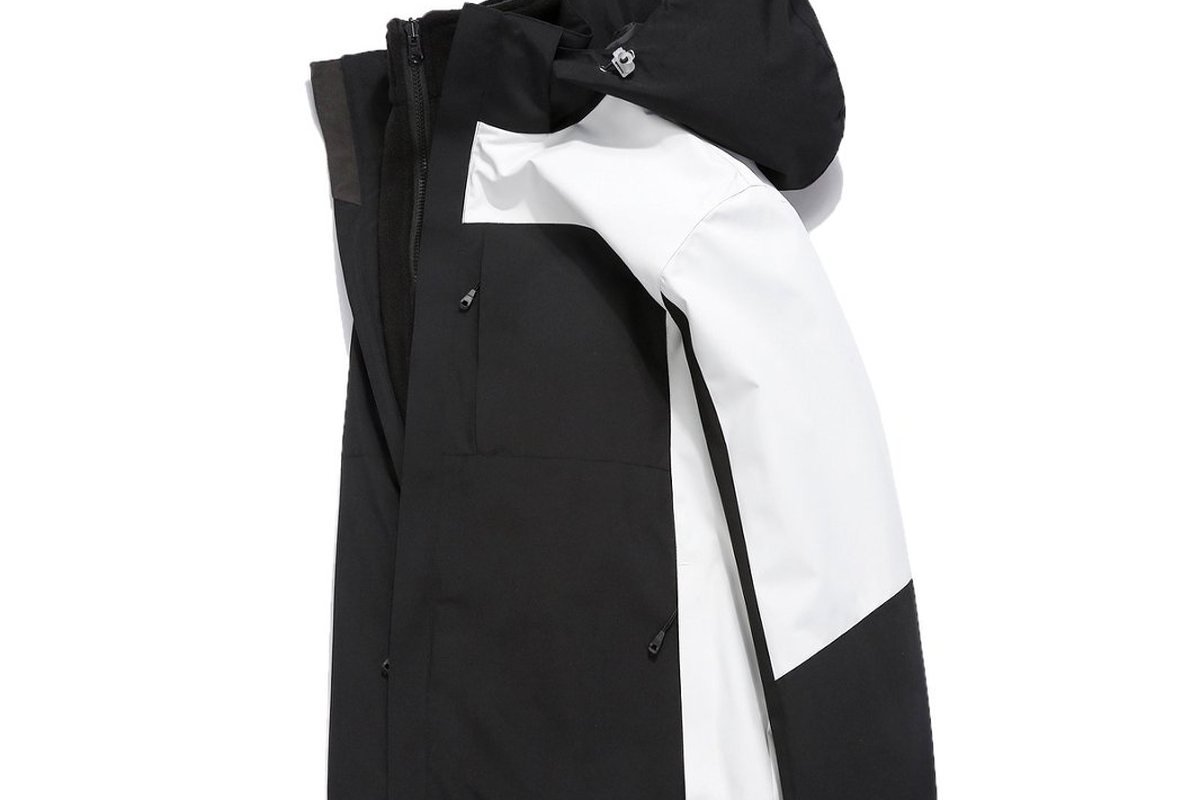
Why Order an Unbranded Prototype First?
Buyers frequently discover that factories push branding or artwork setup before they will discuss a sample, even when the buyer only wants to check construction quality first. A single prototype jacket no branding removes that friction and lets you evaluate the manufacturer’s core capabilities without paying for screen setup, embroidery digitizing, or custom woven labels.
Construction Quality Over Marketing Promises
Sample jackets often look acceptable in photos but arrive with inconsistent seam allowances, skipped stitches, or zippers that snag after three uses. One unbranded prototype exposes these issues before you lock in 500 units. You can inspect bar-tack reinforcement at stress points, measure seam tape width on waterproof jackets, and test zipper pull strength without the distraction of logo placement.
Avoiding Upfront Artwork and Setup Costs
Screen printing setup, embroidery digitizing, and custom woven label tooling can add $150-$400 to your first sample. When your primary goal is verifying fabric hand-feel and stitching consistency, those costs deliver zero value. Ordering a plain jacket lets you allocate budget to testing multiple factories or requesting fabric swatches instead.
Faster Sampling Turnaround
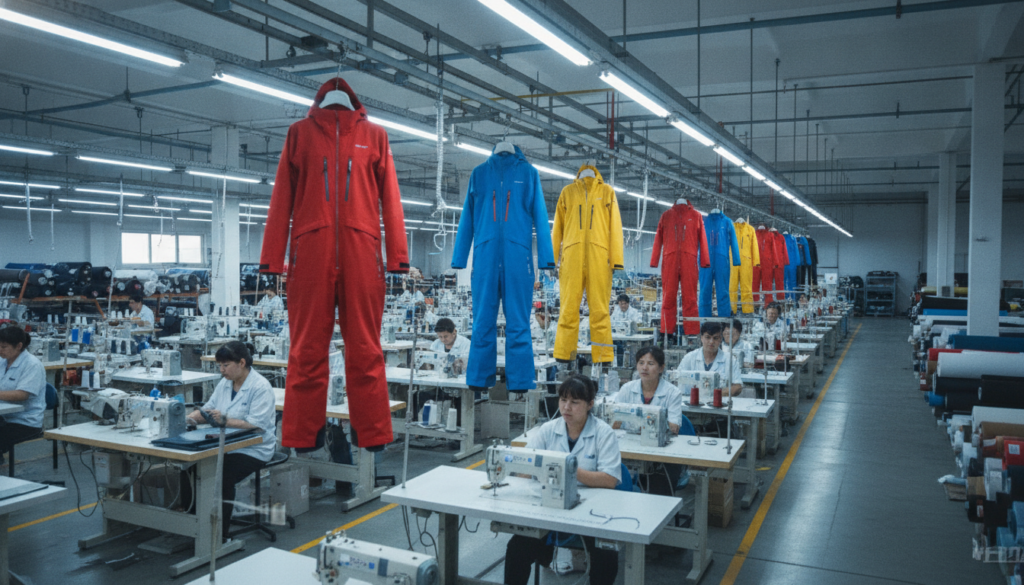
Artwork approval loops add 3-5 days to sample lead time. A no-branding order skips mockup revisions and goes straight to cutting and sewing. At PTOUTWEAR’s 3,000m² Taizhou Sanmen facility, a plain softshell or hardshell sample typically ships within 7-10 days because the production team bypasses the artwork department entirely.
What Does ‘No Branding’ Mean for Different Buyers?
The term ‘no branding’ carries different implications depending on your business model. A DTC outdoor brand founder, a corporate uniform buyer, and a school team coordinator each use unbranded prototypes for distinct purposes.
DTC Outdoor Brand Founders
You need a production-grade jacket that matches your tech pack but without hang tags, woven labels, or printed logos. The goal is to verify that the factory can execute your specified 10K/10K waterproof-breathable membrane, taped seams, and YKK AquaGuard zippers before you invest in branding assets. The prototype should be indistinguishable from your final product except for the absence of logos.
Corporate and Team Uniform Buyers
You want a blank jacket in your chosen colorway and fabric weight to test fit across different body types and confirm durability under daily wear. Branding will be added later via embroidery or heat transfer once the base style is approved. The single prototype jacket no branding serves as a wearable fit sample for your team leads or purchasing committee.
School Uniform Programs
You need a plain jacket to present to school administration or parent committees for approval, with branding deferred until the style and price point are locked. The prototype must meet safety reflective-tape requirements and pass basic wash testing, but school logos and house colors are applied only after board sign-off.
Small Outdoor Wholesalers
You plan to white-label the jacket for multiple retail clients, each with their own branding. A plain sample lets you evaluate base construction and negotiate pricing without committing to a single client’s artwork. You may order one unbranded prototype, then request branded samples for two different retailers once the base style is validated.
How to Order a Single Prototype Jacket Without Branding
Ordering a single prototype jacket no branding follows a streamlined process when the factory supports true 1-piece sampling. The workflow below reflects PTOUTWEAR’s sample development path and applies broadly to manufacturers with in-house pattern and cutting capabilities.
Step 1: Share Your Specification or Reference Sample
Provide a tech pack with fabric type, weight, waterproof rating, zipper brand, and construction details. If you lack a tech pack, send a reference jacket with notes on what you want to change. The factory pattern team will draft a working spec sheet for your approval. At PTOUTWEAR, buyers without tech packs receive design support to translate a reference garment into a producible specification.
Step 2: Select Fabric and Trim Without Branding Elements
Choose your shell fabric, lining, insulation (if applicable), zippers, and snap fasteners from the factory’s available stock or request a specific mill. Explicitly state ‘no woven labels, no printed logos, no embroidery’ so the sample is sewn with blank label positions or generic size tags only. Confirm whether you want a plain colorway or your final production color; some buyers test black or navy first to simplify fabric sourcing.
Step 3: Confirm Sample Fee and Refund Terms
Clarify the sample fee, shipping cost, and refund policy upfront. PTOUTWEAR charges a $100 sample fee refundable against bulk orders of 30 pieces or more per SKU, which is the production MOQ. Some factories refund only if you place a minimum bulk order within 90 days, creating risk if the first prototype fails quality checks. Confirm refund eligibility in writing before payment.
Step 4: Approve Digital Mockup or Pattern
The factory sends a digital sketch or CAD rendering showing pocket placement, seam lines, and zipper configuration. Review for fit intent (slim, regular, or relaxed) and functional details like pit-zip vents or adjustable cuffs. Approve the pattern before cutting to avoid revision fees. According to Eliian, digital mockups may be delivered within 24 hours, accelerating the approval loop.
Step 5: Receive and Inspect the Prototype
The factory ships your single prototype jacket no branding within 7-10 days. Inspect immediately using the checklist in the next section. Document any defects with photos and measurements, then request revisions or approve for bulk. Some manufacturers offer one free revision round; additional changes may incur a second sample fee.
Factory Quality Verification Checklist for One Sample
A single unbranded prototype reveals more about factory capability than a sales presentation. Use this inspection framework to convert one jacket into a reliable quality signal.
Seam and Stitching Integrity
- Stitch density: Count stitches per inch on main seams; outdoor jackets typically require 10-12 SPI for durability. Fewer than 8 SPI indicates rushed sewing or incorrect machine settings.
- Seam straightness: Hold the jacket against a light source and check for wavy or puckered seams, especially on curved areas like armholes and hood attachment.
- Bar-tack reinforcement: Inspect stress points (pocket corners, zipper ends, strap attachment) for double or triple bar-tacks. Missing reinforcement is a red flag for high-volume production shortcuts.
- Seam tape application: On waterproof jackets, peel back the interior lining to verify that seam tape is centered, smooth, and bonded without bubbles or gaps. Uneven tape application leaks under 10K mm water column pressure.
Fabric and Membrane Performance
- Hand-feel consistency: Compare the prototype fabric to your approved swatch. Significant differences in texture or drape suggest the factory substituted a cheaper mill lot.
- Waterproof membrane bond: Flex the fabric sharply at a seam; the membrane should not delaminate or crackle. Crackling indicates poor lamination adhesive or insufficient curing time.
- DWR coating: Spray water on the shell fabric; droplets should bead and roll off. If water soaks in immediately, the durable water repellent was skipped or applied incorrectly.
- Breathability test: Wear the jacket during light activity for 20 minutes. Excessive interior condensation on a jacket spec’d for 10K breathability suggests the factory used a non-breathable film instead of a microporous membrane.
Hardware and Trim Quality
- Zipper brand verification: Check the zipper pull for YKK, SBS, or your specified brand logo. Generic no-name zippers fail after 500 cycles; YKK AquaGuard zippers are rated for 5,000+ cycles.
- Zipper operation: Zip and unzip 20 times under tension. The slider should glide smoothly without snagging or requiring excessive force. A sticky zipper on a new sample will jam completely after 50 wears.
- Snap and Velcro hold: Test cuff closures, storm flaps, and pocket snaps under pull force. Snaps that pop open with light pressure indicate incorrect cap sizing or weak prong setting.
- Drawcord and elastic: Pull hood and hem drawcords to full extension and release; they should retract smoothly. Elastic cuffs should return to original diameter after stretching. Weak elastic is a common cost-cutting substitution.
Fit and Pattern Accuracy
- Measurement verification: Lay the jacket flat and measure chest width, sleeve length, and body length against your tech pack. Tolerances should be within ±1 cm; deviations beyond ±2 cm indicate pattern-grading errors.
- Sleeve pitch and armhole: Wear the jacket and raise your arms overhead. Binding or pulling across the shoulders suggests incorrect sleeve pitch, requiring pattern revision before bulk.
- Hood fit: The hood should cover your head without obstructing peripheral vision and stay in place during head turns. A poorly drafted hood pattern is expensive to fix after bulk production starts.
- Hem balance: Check that the front and back hem hang level when the jacket is zipped. An unbalanced hem indicates cutting errors or fabric grain misalignment.
Inspection tip: Photograph every defect with a ruler in frame for scale. These images become your revision request and set a quality baseline for bulk production sign-off.
Real Cost Breakdown for One Unbranded Prototype
Understanding the true cost of a single prototype jacket no branding helps you budget accurately and compare factory quotes. The table below reflects typical costs for a mid-weight softshell or hardshell jacket sample from a Chinese manufacturer with in-house pattern and sampling capabilities.
Hidden Costs to Confirm Upfront
- Pattern grading for size run: Some factories quote a low sample fee but charge $200-$400 later to grade the approved pattern into S/M/L/XL/XXL for bulk production. Confirm whether grading is included in the sample fee or billed separately.
- Fabric minimums: If you request a custom fabric color or a specialized membrane, the mill may require a 300-meter minimum buy. The factory will invoice you for the full roll even though your sample uses 1.5 meters. Stick to in-stock fabrics for prototype testing.
- Customs and import duties: A single jacket sample typically qualifies for de minimis exemption (under $800 value for US imports), avoiding formal customs clearance. Verify your country’s threshold to prevent surprise brokerage fees.
- Payment processing fees: PayPal and Stripe charge 3-4% on international transactions. Wire transfer fees range from $15-$45. Factor these into your total sample budget, especially when testing multiple factories.
Red Flags When Ordering a Single Prototype
Certain factory behaviors during the sampling process predict problems during bulk production. Watch for these warning signals when you request a single prototype jacket no branding.
Unclear or Shifting MOQ Language
A factory website advertises low MOQ or 1-piece sampling, but the sales representative says the real order path still assumes 100 pieces or a bulk commitment after sampling. This bait-and-switch is common among trading companies that aggregate orders across multiple buyers to meet their own supplier’s MOQ. Ask for written confirmation: ‘Can I order exactly 1 sample with no bulk commitment required upfront?’ and ‘What is your production MOQ per SKU if I approve the sample?’
Refund Conditions That Create Risk
Sample fees may be refundable only if the bulk order proceeds, which creates risk if the first prototype fails quality checks. Some factories add a time limit: ‘Sample fee refunded only if you place a bulk order within 60 days.’ This pressures you to commit before thorough testing. Negotiate for refund eligibility based on order quantity alone, not timeline, or accept the sample fee as a sunk cost for quality vetting.
Resistance to Plain or Blank Samples
The factory insists on adding a generic logo, sewn-in label, or printed neck tag even when you explicitly requested no branding. This signals a production line optimized for their own private-label inventory, not custom OEM jacket manufacturing. A true OEM facility can sew a completely blank jacket because their workflow accommodates client-specific branding at any stage.
No Fabric or Trim Verification
You specify YKK AquaGuard zippers and 10K/10K waterproof-breathable fabric, but the factory does not send a fabric swatch or zipper photo for approval before cutting the sample. The prototype arrives with generic hardware and a fabric that feels nothing like your reference. This indicates the factory substitutes components based on what is in stock, not what you specified. Demand swatch approval before sample production starts.
Vague Lead Time Estimates
The sales team says ‘sample ready in 1-2 weeks’ without specifying business days, calendar days, or whether that includes shipping. You follow up after 10 days and hear ‘still in production.’ According to Akilex, custom sample development for rain jackets is advertised at 3-7 working days depending on technical detail. A factory that cannot commit to a specific day-count range lacks production control or is juggling too many orders.
No Quality Control Documentation
You ask for a QC checklist or inspection photos before the sample ships, and the factory says ‘we check everything, no problem.’ Professional manufacturers photograph samples at key stages (post-cutting, post-sewing, pre-packing) and share a basic inspection report even for 1-piece orders. Refusal to document quality suggests the sample will bypass QC entirely.
Key Takeaways
- PTOUTWEAR allows a true 1-piece sample MOQ with no bulk commitment required upfront, while bulk production MOQ is 30 pieces per SKU.
- The $100 sample fee is refundable against bulk orders, reducing net prototype cost to shipping and fabric only once you scale.
- Ordering a single prototype jacket no branding eliminates artwork setup fees and lets you focus purely on stitching quality, fabric performance, and hardware durability.
- Buyers report that sample jackets often look acceptable online but arrive with poor stitching or weak zippers, making one physical test piece essential before bulk.
- A plain sample serves different purposes for DTC brands (validating construction before branding investment), corporate buyers (fit testing across body types), and wholesalers (white-label base evaluation).
- Red flags include unclear MOQ language, sample fee refunds conditional on bulk orders placed within tight timelines, and factories that resist sewing completely blank jackets.
FAQ
Can I order one jacket sample before bulk production?
Yes, PTOUTWEAR’s sample MOQ is 1 piece with a $100 sample fee refundable against bulk orders of 30 or more pieces per SKU. The sample is produced in the same facility using the same production workflow as bulk orders, so it accurately represents final quality. Lead time is 7-10 days from fabric approval to finished jacket. You can request revisions after inspecting the first sample, with one revision typically included in the initial fee.
What is the difference between a sample jacket and a production jacket?
A sample jacket is sewn by the same production team using the same machines and quality standards as bulk orders, but it is produced individually rather than in a batch. The fabric, zippers, and construction methods are identical to what you will receive in bulk. The only difference is that samples may be sewn by a senior operator to ensure accuracy, while bulk production distributes tasks across multiple operators. Samples also bypass efficiency optimizations like bundled cutting, so per-unit cost is higher, but quality is representative.
How do I verify waterproof performance in a single sample?
Spray water on the shell fabric; droplets should bead and roll off if DWR coating was applied correctly. Flex the fabric sharply at seams to check for membrane delamination or crackling. Inspect seam tape from the interior by peeling back the lining; tape should be centered, smooth, and bonded without bubbles. For a more rigorous test, wear the jacket in light rain or under a shower for 10 minutes and check for interior moisture. Professional buyers also request a hydrostatic head test report from the factory, confirming the fabric meets the specified 10K or 20K mm water column rating.
Ready to verify factory quality with a single prototype before committing to bulk?
Request Your 1-Piece Sample →
Written by Ivan Chen, Sales Engineer at PTOUTWEAR – 13 years in outdoor apparel manufacturing.