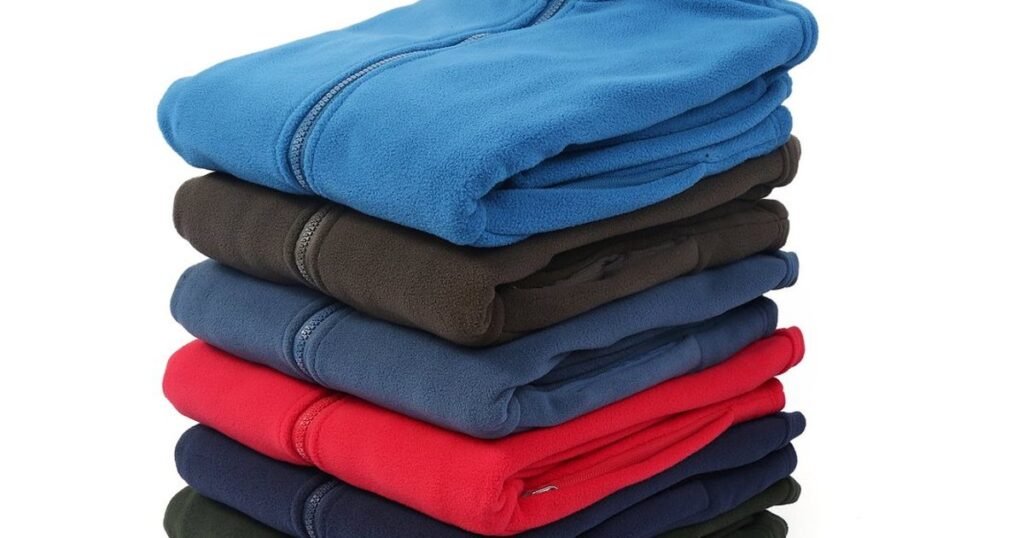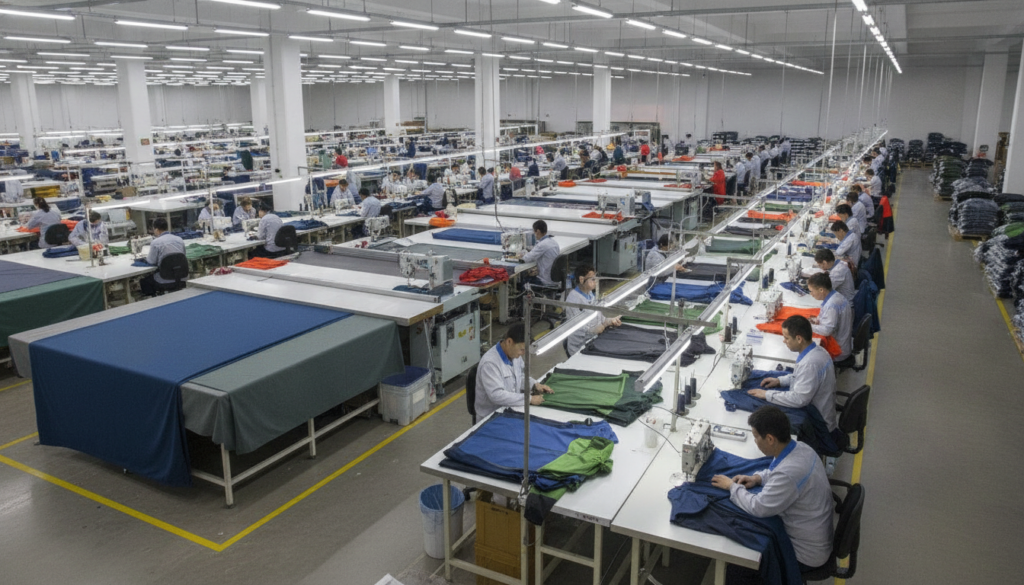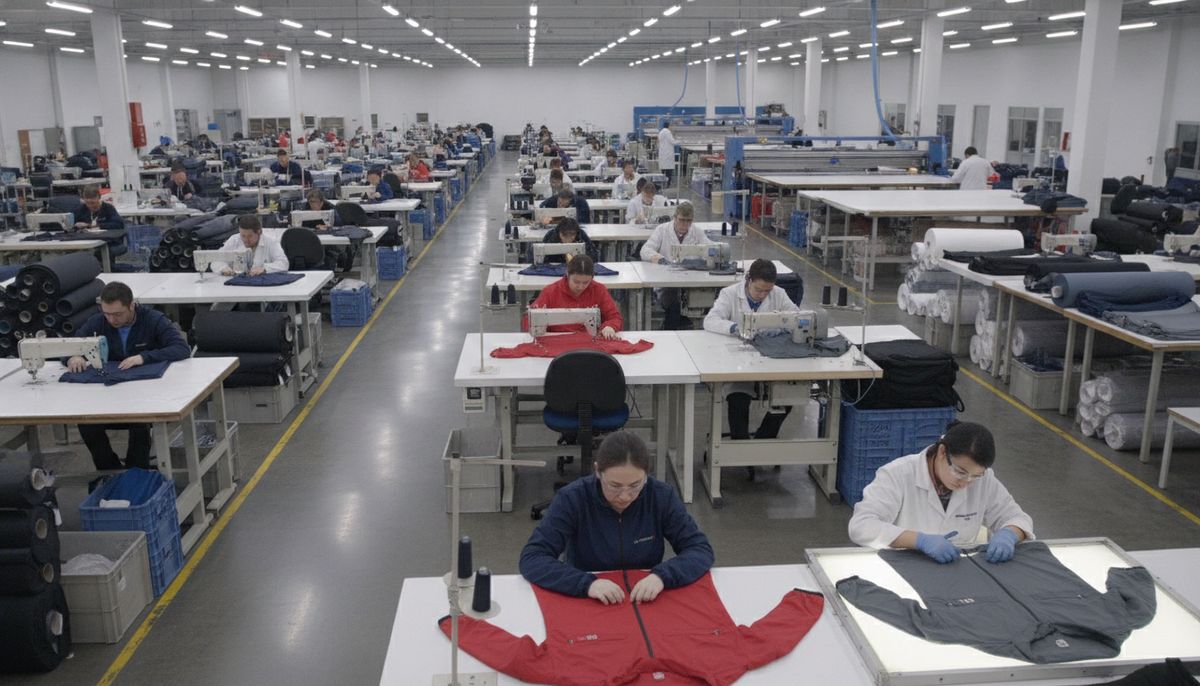
A custom pullover windbreaker is a half-zip or quarter-zip lightweight shell jacket manufactured with your brand’s logo, colorways, and technical specifications, typically using nylon or polyester ripstop fabric with DWR (Durable Water Repellent) coating. Sample MOQ starts at 1 piece with a $100 sample fee (refunded against bulk orders of 30+ pieces), and bulk production MOQ is 10 pieces per style with mixed colors and sizes. Sampling takes 7-10 days, and bulk production runs 25-35 days from fabric approval to finished goods.
📋 Table of Contents
- Executive Summary
- What Makes a Pullover Windbreaker Different from a Full-Zip?
- Fabric Construction and Performance Specifications
- Customization Options: Logo Placement, Colorways, and Branding
- MOQ, Pricing, and Lead Times for Custom Production
- Hood Fit, Ventilation, and Usability Design
- Certification and Compliance Documentation
- Key Takeaways
- Frequently Asked Questions
Executive Summary
- Pullover design advantages: Half-zip or quarter-zip construction reduces weight, eliminates full-length zipper failure points, and improves packability for outdoor brands targeting ultralight or travel-focused buyers.
- Sampling and MOQ: PTOUTWEAR offers 1-piece sampling with a $100 fee refunded on bulk orders of 30+ pieces, and a 10-piece bulk MOQ per style with mixed colors and sizes, suitable for DTC startups and small outdoor brands.
- Lead times: Sampling completes in 7-10 days, bulk production in 25-35 days, with a rush option for 1,000 pieces in 2 weeks at a 25% surcharge.
- Performance specifications: Nylon or polyester ripstop fabric with PFC-free DWR coating provides windproof protection and light water resistance, tested to withstand wind speeds and light rain without membrane construction.
- Common usability complaints: Buyers report oversized hoods without drawstring adjustment and logo peeling after first wash, both addressable through pattern grading and heat-transfer or embroidery decoration testing.
What Makes a Pullover Windbreaker Different from a Full-Zip?
A pullover windbreaker uses a half-zip or quarter-zip closure instead of a full-length center-front zipper. This design saves 40-60 grams per jacket, eliminates the most common failure point (zipper separation under pack-strap pressure), and packs 15-20% smaller than an equivalent full-zip shell. Outdoor brands targeting ultralight hikers, trail runners, and travel buyers choose pullovers for weight savings and durability.
Weight and Packability
A full-zip windbreaker in size M typically weighs 180-220 grams with a nylon ripstop shell and full-length YKK #5 zipper. A pullover version of the same shell weighs 140-180 grams because the half-zip uses a shorter YKK #3 or #5 coil zipper (8-12 inches instead of 24-28 inches) and eliminates the zipper placket reinforcement tape. The jacket compresses into its own chest pocket or stuff sack at roughly fist-size, making it a packable layer for summit pushes or emergency weather protection.
Durability Under Load
Full-length zippers fail when pack hip-belts or shoulder straps apply lateral pressure to the zipper tape, causing tooth separation or slider derailment. A half-zip pullover places the zipper at the chest, above the typical pack contact zone, reducing zipper-related warranty claims. Buyers who run multi-day alpine programs or guided trekking operations report lower replacement rates with pullover designs.
Ventilation Trade-Off
A full-zip jacket offers maximum ventilation by opening the entire front panel. A pullover provides ventilation only through the half-zip opening and underarm gussets or mesh panels if specified. Brands targeting high-output activities (trail running, ski touring) add pit-zips or mesh back panels to compensate. For casual outdoor use or windbreak-only applications, the half-zip provides sufficient airflow without the added cost and weight of a full zipper.
Fabric Construction and Performance Specifications
Custom pullover windbreakers use nylon or polyester ripstop fabric in 20-40 denier weights with a DWR coating for wind resistance and light water repellency. Fabric choice determines breathability, durability, and moisture management, which directly affect user comfort during aerobic outdoor activities.
Nylon Ripstop vs. Polyester Ripstop
Nylon ripstop (20D-30D) offers higher tear strength and abrasion resistance than polyester at the same weight, making it the preferred choice for alpine and bushwhacking use. Polyester ripstop (30D-40D) dries faster, holds color better under UV exposure, and costs 10-15% less per meter than nylon, suitable for casual outdoor or corporate team-gear applications. Both fabrics accept screen printing, heat transfer, and embroidery for custom logo service without fabric puckering or distortion.
DWR Coating: PFC-Free vs. Traditional C6
DWR (Durable Water Repellent) coatings cause water to bead and roll off the fabric surface rather than soaking in. Traditional C6 fluorocarbon DWR delivers the highest water repellency but contains PFCs (per- and polyfluorinated chemicals) restricted under EU REACH and targeted by environmental advocacy groups. PFC-free DWR formulations (typically hydrocarbon-based or silicone-based) meet environmental compliance requirements but lose repellency faster and require more frequent reapplication after washing. PTOUTWEAR applies PFC-free DWR as standard to meet US, UK, EU, and Australia buyer sustainability expectations, certified by SGS testing.
Breathability: CFM vs. MVTR
Windbreaker fabrics are measured for breathability using CFM (cubic feet per minute of air permeability) or MVTR (moisture vapor transmission rate in grams per square meter per 24 hours). A tightly woven ripstop with low CFM (under 5 CFM) blocks wind effectively but traps perspiration, causing clamminess during high-output activities. Fabrics with 10-20 CFM allow moderate airflow for active use while still providing wind protection. MVTR ratings of 5,000-10,000 g/m²/24hr indicate the fabric will wick perspiration vapor in cool, dry conditions but will not perform like a waterproof-breathable membrane (15,000+ MVTR). Buyers specify CFM or MVTR targets based on intended activity level and layering system.
Sample MOQ: 1 piece. Bulk MOQ: 10 pieces per style (mix colors and sizes). Sampling time: 7-10 days. Bulk production: 25-35 days.
Customization Options: Logo Placement, Colorways, and Branding
Custom pullover windbreaker orders specify logo placement, decoration method, colorway selection, and trim details to match brand identity and end-user expectations. Each customization choice affects cost, lead time, and durability.
Logo Placement and Decoration Methods
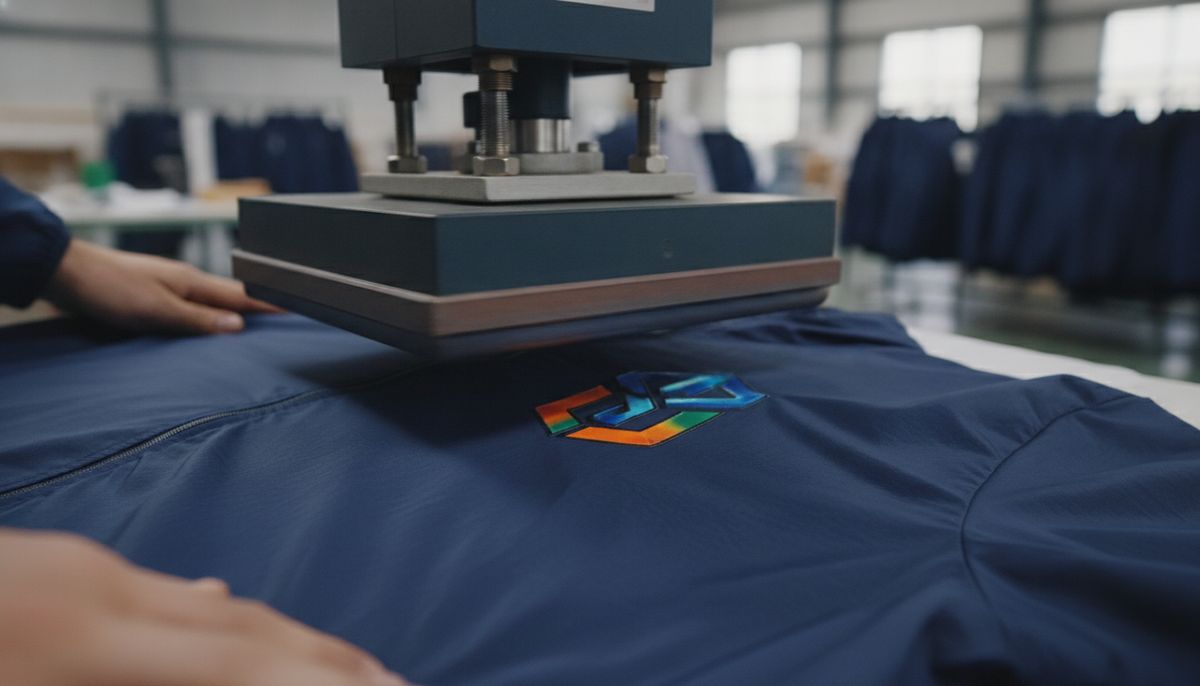
Common logo placements include left chest (3-4 inch width), center chest (6-8 inch width), upper back (10-12 inch width), and sleeve (2-3 inch width). Decoration methods include screen printing, heat transfer, embroidery, and woven labels. Screen printing costs $0.50-$1.50 per location for orders over 100 pieces but may crack or fade after repeated washing if low-quality plastisol ink is used. Heat transfer (vinyl or sublimation) costs $1.00-$2.50 per location and offers full-color capability but can peel at edges if applied at incorrect temperature or pressure. Embroidery costs $2.00-$4.00 per location depending on stitch count, provides the highest durability, but adds weight and stiffness to lightweight shell fabrics. Buyers report logo peeling complaints when heat-transfer vinyl is applied without proper adhesive testing or when screen-printed logos use non-stretch ink on stretch-woven fabrics.
Colorway Selection and Pantone Matching
Stock fabric colors (black, navy, gray, red, royal blue) carry no minimum order quantity surcharge and ship within standard lead times. Custom Pantone color matching requires fabric dyeing in 300-500 meter minimums per color, adding 10-15 days to lead time and $1.50-$3.00 per piece to unit cost. Brands ordering under 100 pieces per color typically select from stock colors or accept a closest-available match to avoid custom dyeing fees. Corporate uniform programs ordering 200+ pieces per color justify custom Pantone matching to maintain brand consistency across apparel categories.
Trim and Hardware Customization
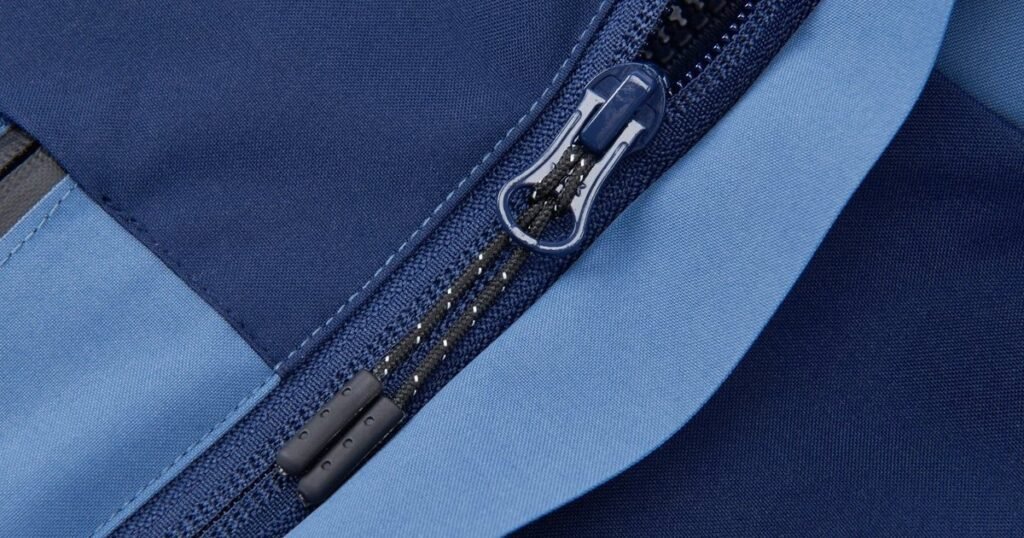
Custom trim options include zipper color (matching or contrast), zipper puller (standard cord, custom rubber pull, or branded metal pull), drawcord color (matching or contrast), and elastic cuff binding color. Standard YKK #3 or #5 coil zippers in black, navy, or gray add no cost. Custom zipper colors or branded pullers add $0.50-$1.50 per jacket depending on order quantity. Reflective piping or trim adds $1.00-$2.00 per jacket and improves visibility for trail running or cycling applications. OEM jacket manufacturing allows full specification control for brands requiring specific hardware or trim details.
MOQ, Pricing, and Lead Times for Custom Production
Understanding minimum order quantities, unit pricing by volume tier, and production lead times helps buyers plan inventory investment and product launch schedules. Custom pullover windbreaker pricing varies by fabric choice, decoration complexity, and order size.
Sampling MOQ and Cost
PTOUTWEAR offers 1-piece sampling with a $100 sample fee that covers pattern development, fabric cutting, sewing, and quality inspection. The sample fee is refunded against bulk orders of 30+ pieces. Sampling takes 7-10 days from specification approval to finished sample shipment. Buyers use samples to validate fit, fabric hand-feel, logo placement, and color accuracy before committing to bulk production. DTC outdoor brand founders typically order 2-3 samples in different sizes to test fit across the size range and photograph for e-commerce listings.
Bulk Production MOQ and Pricing Tiers
Bulk production MOQ is 10 pieces per style, with colors and sizes mixed within that minimum. Unit pricing decreases with volume:
Pricing includes fabric, cutting, sewing, quality inspection, and basic packaging (polybag with size sticker). Custom hangtags, woven labels, and retail-ready packaging add $0.30-$1.00 per piece depending on specification.
Production Lead Times and Rush Options
Standard bulk production takes 25-35 days from fabric approval to finished goods ready to ship. This timeline includes fabric procurement (7-10 days), cutting and sewing (10-14 days), quality inspection (2-3 days), and final packing (2-3 days). Rush production for orders up to 1,000 pieces can be completed in 2 weeks with a 25% surcharge, suitable for event-driven orders or emergency restocks. DDP (Delivered Duty Paid) shipping to US, UK, EU, Canada, and Australia ports is available, with transit times of 20-35 days by sea or 5-7 days by air freight.
Hood Fit, Ventilation, and Usability Design
Hood fit and adjustment features directly affect user satisfaction and warranty claim rates. Buyers report that oversized hoods without drawstring adjustment cover the eyes and nose, reducing visibility and comfort during active use.
Hood Volume and Drawstring Adjustment
A properly fitted hood should cover the head and ears without obstructing forward or peripheral vision. Hood volume is controlled by pattern grading (the three-dimensional shape of the hood panels) and adjustment hardware (drawcords, elastic binding, or hook-and-loop tabs). Buyers report complaints when hoods are drafted for one-size-fits-all use without adjustment, causing the hood to sag over the face in smaller sizes or pull tight in larger sizes. Adding a simple elastic drawcord with cord-lock at the hood opening allows users to cinch the hood to fit their head size, eliminating the visibility obstruction issue at minimal cost (under $0.30 per jacket).
Pocket Access and Zipper Placement
Pullover windbreakers typically feature two hand-warmer pockets (zippered or open-entry) and one chest pocket (often used as a stuff-sack). Pocket placement must account for pack hip-belt and harness compatibility. Hand-warmer pockets placed too low (below the natural waistline) become inaccessible when wearing a backpack hip-belt. Chest pockets placed too high interfere with pack shoulder straps. Buyers specify pocket placement based on intended use: trail running and alpine climbing applications place pockets higher to clear race vests and climbing harnesses, while casual outdoor and corporate team-gear applications use standard mid-torso placement.
Hem and Cuff Adjustment
Elastic binding at the cuffs and hem prevents wind from entering the jacket and keeps the shell in place during movement. Standard elastic cuff binding uses 1-inch knit elastic sewn into the sleeve hem, providing a snug fit without restricting circulation. Adjustable hem drawcords (internal or external) allow users to cinch the jacket hem to seal out wind or loosen for ventilation. Buyers targeting high-wind environments (coastal, alpine, desert) specify adjustable hems; casual outdoor applications typically use fixed elastic hems to reduce cost and weight.
Certification and Compliance Documentation
US, UK, EU, Canada, and Australia buyers require compliance documentation for restricted substances, labor standards, and product safety. Certification requirements vary by target market and distribution channel.
Restricted Substance Testing: OEKO-TEX and REACH
OEKO-TEX Standard 100 certification verifies that textiles have been tested for harmful substances including heavy metals, formaldehyde, phthalates, and azo dyes. EU REACH (Registration, Evaluation, Authorization, and Restriction of Chemicals) regulation restricts the use of PFCs, flame retardants, and other chemicals in textile products sold in the European Union. PTOUTWEAR holds ISO 9001 and SGS certification for quality management and restricted substance testing, with OEKO-TEX certification pending but not yet held. Buyers shipping to EU markets require REACH-compliant DWR coatings (PFC-free) and test reports showing compliance with Annex XVII substance restrictions.
Labor and Social Compliance: BSCI
BSCI (Business Social Compliance Initiative) audits verify that factories meet labor standards for working hours, wages, health and safety, and freedom of association. UK and EU buyers, particularly those selling through retail chains, require BSCI or equivalent audits (WRAP, SA8000, Fair Trade) as a condition of supplier approval. PTOUTWEAR’s BSCI certification is pending but not yet held; buyers requiring immediate BSCI documentation should request audit timeline and interim compliance evidence.
Product Safety and Flammability Standards
US Consumer Product Safety Commission (CPSC) regulates flammability of children’s sleepwear and general wearing apparel under 16 CFR Part 1610 and 16 CFR Part 1615. Adult outdoor apparel sold in the US must pass the Class 1 (normal flammability) standard, which most nylon and polyester ripstop fabrics meet without additional treatment. UK and EU markets apply similar flammability standards under EN 14878 for outdoor apparel. Australia and Canada follow their own product safety frameworks but generally accept US or EU test reports. Buyers should request flammability test reports for fabrics before bulk production to ensure compliance with target-market regulations.
Key Takeaways
- A custom pullover windbreaker is a half-zip or quarter-zip lightweight shell jacket manufactured with your brand’s logo, colorways, and technical specifications, using nylon or polyester ripstop fabric with PFC-free DWR coating for wind resistance and light water repellency.
- PTOUTWEAR offers 1-piece sampling with a $100 sample fee refunded on bulk orders of 30+ pieces, and a 10-piece bulk MOQ per style with mixed colors and sizes, making custom production accessible to DTC outdoor brand founders and small team-gear buyers.
- Sampling completes in 7-10 days and bulk production in 25-35 days, with a rush option for 1,000 pieces in 2 weeks at a 25% surcharge, suitable for event-driven orders or emergency restocks.
- Buyers report oversized hoods without drawstring adjustment and logo peeling after first wash as the most common usability and quality complaints, both addressable through pattern grading with elastic drawcord adjustment and decoration testing before bulk production.
- PFC-free DWR coatings meet EU REACH compliance and US, UK, Canada, and Australia environmental expectations, certified by SGS testing, while OEKO-TEX and BSCI certifications are pending but not yet held at PTOUTWEAR.
- Nylon ripstop offers higher tear strength and abrasion resistance than polyester at the same weight, making it the preferred choice for alpine and bushwhacking use, while polyester ripstop dries faster and costs less for casual outdoor or corporate team-gear applications.
Frequently Asked Questions
Can you customize a pullover windbreaker with a logo?
Yes, custom pullover windbreakers accept screen printing, heat transfer, embroidery, and woven labels for logo placement on left chest, center chest, upper back, or sleeve. Screen printing costs $0.50-$1.50 per location for orders over 100 pieces, heat transfer costs $1.00-$2.50 per location with full-color capability, and embroidery costs $2.00-$4.00 per location depending on stitch count. Buyers should request decoration testing on sample jackets before bulk production to validate logo durability after washing and wearing, particularly for heat-transfer vinyl which can peel if applied at incorrect temperature or pressure.
What is the minimum order quantity for custom windbreakers?
PTOUTWEAR’s sample MOQ is 1 piece with a $100 sample fee refunded against bulk orders of 30+ pieces, and bulk production MOQ is 10 pieces per style with colors and sizes mixed within that minimum. This low MOQ structure allows DTC outdoor brand founders and small team-gear buyers to test market demand with minimal inventory investment before scaling to larger production runs. School and corporate uniform programs start at 30 pieces per style per color to justify custom Pantone color matching and branded trim options.
Are pullover windbreakers waterproof or only water-resistant?
Pullover windbreakers with DWR-coated nylon or polyester ripstop fabric are water-resistant, not waterproof. The DWR coating causes water to bead and roll off the fabric surface, protecting against light rain and mist, but prolonged exposure to moderate or heavy rain will eventually soak through because the fabric lacks a waterproof membrane or taped seams. Buyers requiring full waterproof protection should specify a 2-layer or 2.5-layer laminate construction with taped seams, which adds weight and cost but provides reliable protection in sustained wet conditions. Water-resistant pullover windbreakers are suitable for trail running, alpine climbing, and casual outdoor use where weather protection is intermittent rather than continuous.
Ready to develop your custom pullover windbreaker with low-MOQ sampling and PFC-free DWR certification?
Request 1-Piece Samples →
Written by Ivan Chen, Sales Engineer at PTOUTWEAR, 13 years in outdoor apparel manufacturing.