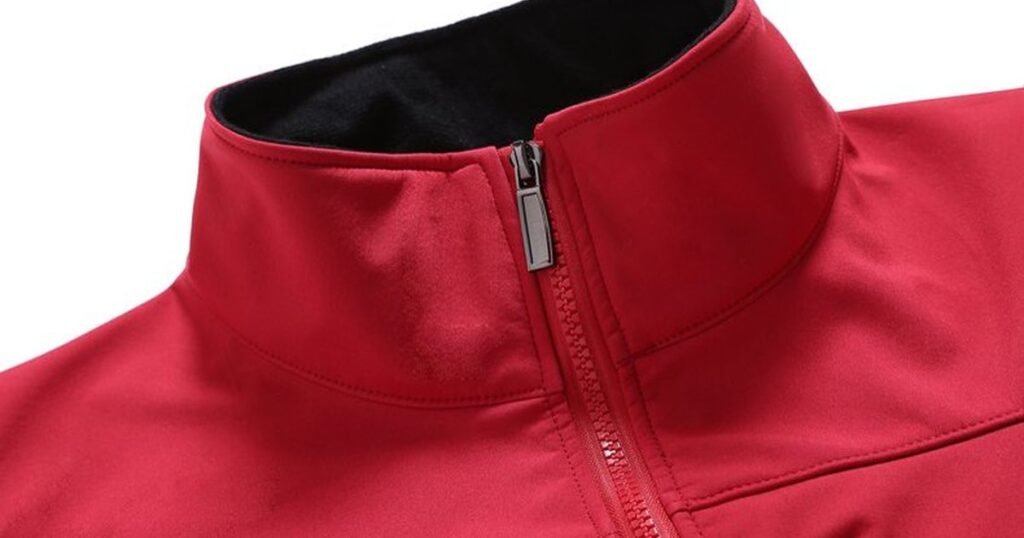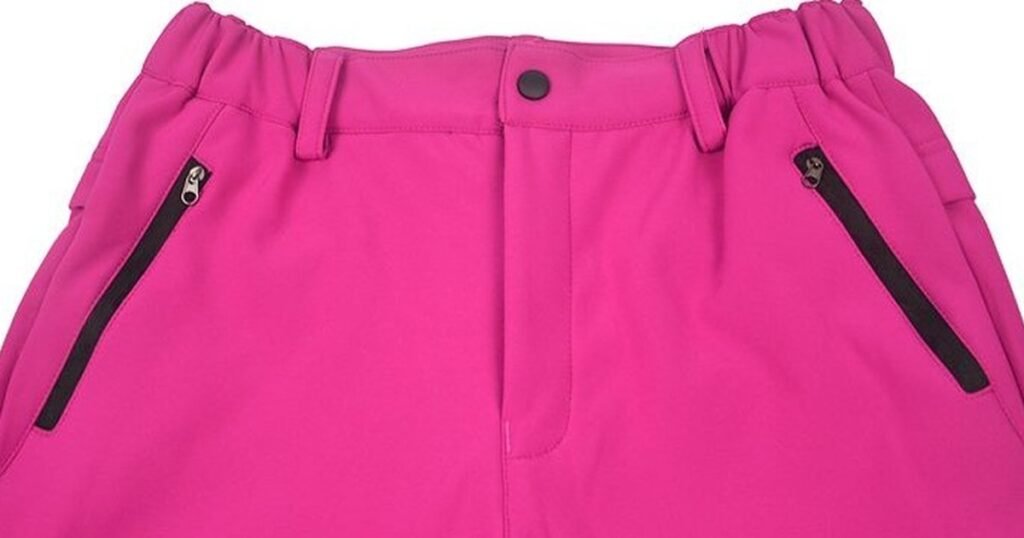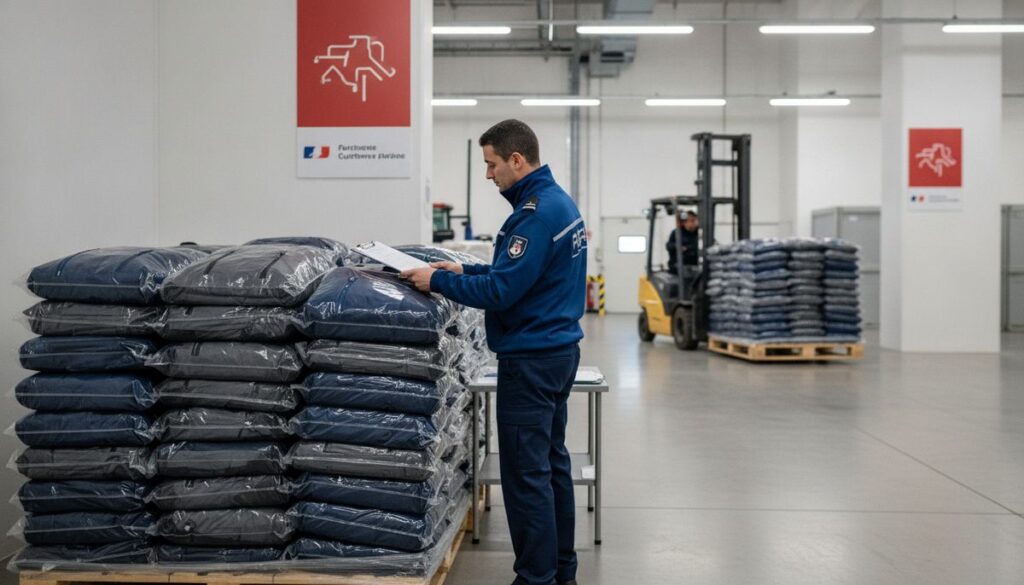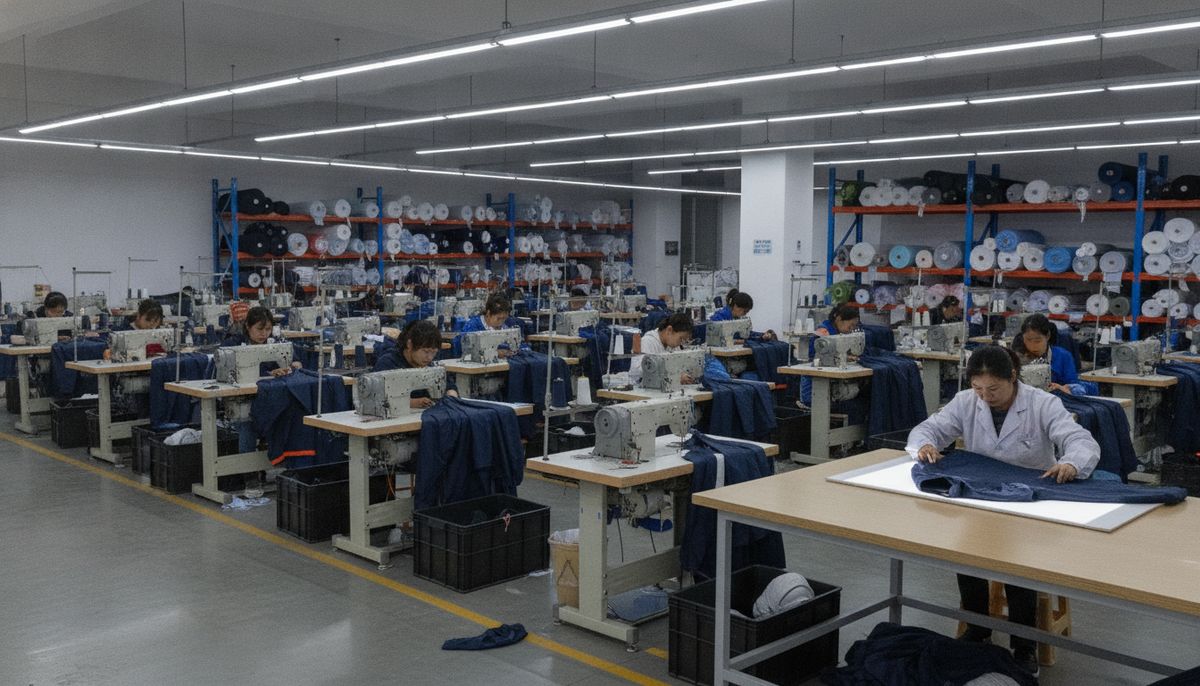
A team windbreaker is a lightweight, wind-resistant jacket designed for group identity-schools, corporate teams, sports clubs, and outdoor programs-typically built from polyester taffeta or ripstop with a DWR finish, elastic cuffs, adjustable hem, and custom logo placement. PTOUTWEAR manufactures team windbreakers with a 1-piece sample MOQ, 10-piece bulk minimum per style (colours and sizes mix), and 7-10 day sampling lead time from our 3,000m² Taizhou Sanmen facility.
📋 Table of Contents
Executive Summary
- Product definition: Team windbreakers are lightweight polyester shells with wind resistance, elastic cuffs, adjustable hems, and custom logo placement for schools, corporate teams, and sports clubs.
- Fabric options: Polyester taffeta and ripstop dominate team windbreaker construction, with PFC-free DWR finishes delivering water resistance without PFAS chemistry.
- Decoration methods: Screen printing, heat transfer, embroidery, and sublimation each suit different logo sizes, colour counts, and wash-durability requirements.
- Sampling and MOQ: PTOUTWEAR offers 1-piece sample MOQ and 10-piece bulk minimum per style, with colours and sizes mixed within that count.
- Lead times: Sampling takes 7-10 days; bulk production runs 25-35 days, with a rush option delivering 1,000 pieces in two weeks at a 25% surcharge.
What Defines a Team Windbreaker?
A team windbreaker is a lightweight outer layer built for group identity rather than technical performance. Schools order them for field trips and spirit wear. Corporate teams issue them for outdoor events and trade shows. Sports clubs use them as warm-up jackets. The garment prioritizes packability, easy care, and cost over waterproofing or breathability.
Construction Features
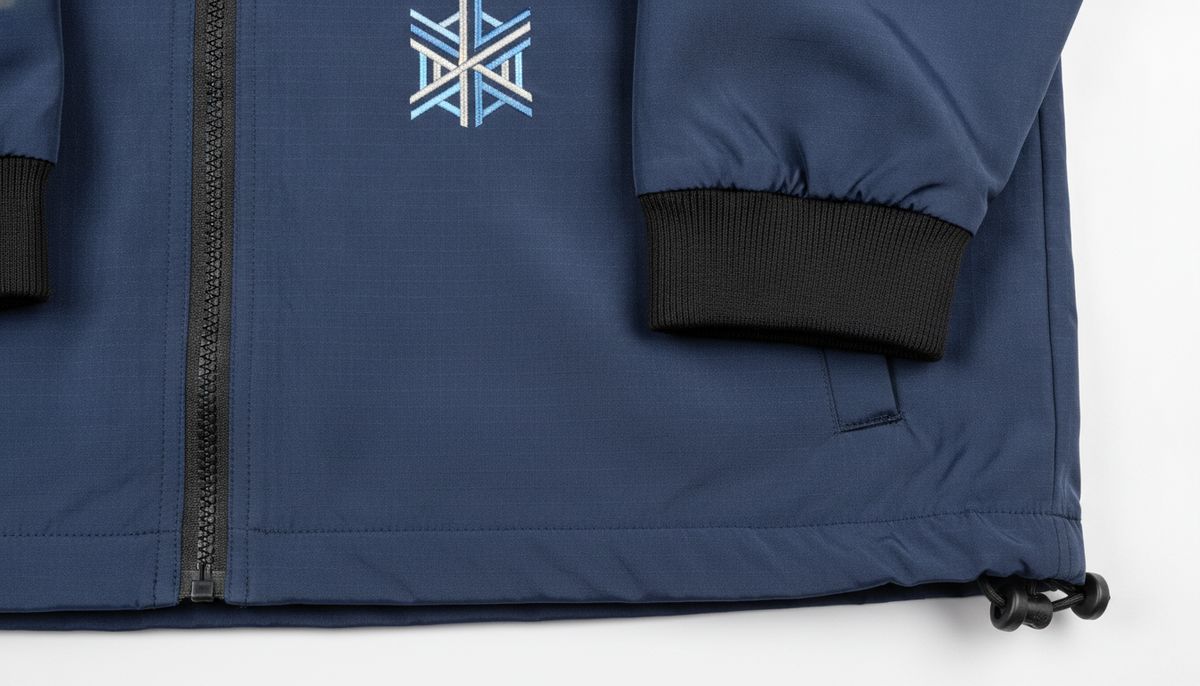
Team windbreakers share a predictable set of design elements that balance function and budget. Elastic cuffs seal wind at the wrists. An adjustable drawcord hem prevents the jacket from riding up. Half-zip or full-zip front closures allow ventilation control. A hood with elastic binding or a snap-down collar adds weather protection without bulk.
- Elastic cuffs: Knit or elastic-bound cuffs prevent wind from entering at the wrists and allow the sleeve to sit comfortably over gloves or bare skin.
- Adjustable hem: A drawcord with cord locks at the hem lets the wearer cinch the jacket to block drafts or loosen it for layering.
- Half-zip or full-zip: Half-zip construction reduces zipper cost and weight; full-zip allows the jacket to be worn open or removed quickly.
- Hood or collar: A packable hood with elastic binding folds into the collar when not needed; a snap-down collar eliminates the hood entirely for a cleaner look.
Packability and Storage
Many team windbreakers pack into their own chest pocket or an attached stuff sack. This feature appeals to buyers ordering for travel teams, outdoor education programs, or corporate retreats where participants carry the jacket in a backpack or duffel. The packed size typically measures 15 cm × 20 cm, small enough to fit in a daypack side pocket.
Weight Range
Team windbreakers weigh between 150 and 250 grams in adult sizes, depending on fabric weight and lining. A 190T polyester taffeta shell with no lining sits at the lower end. A 210T ripstop with a mesh lining adds 50-70 grams. Buyers ordering for youth programs often specify the lighter end of the range to reduce fatigue during all-day wear.
Fabric Construction and Performance
Fabric choice determines wind resistance, water repellency, durability, and cost. Polyester taffeta and ripstop account for the majority of team windbreaker production because they deliver adequate performance at a price point schools and corporate buyers can absorb.
Polyester Taffeta
Polyester taffeta is a plain-weave fabric with a smooth face and a slight sheen. The weave density, measured in thread count (190T, 210T, 230T), controls wind resistance and weight. A 190T taffeta weighs approximately 60 g/m² and blocks light wind but allows air to pass through under sustained gusts. A 230T taffeta weighs 75 g/m² and provides noticeably better wind resistance at a modest cost increase.
Taffeta accepts screen printing and heat-transfer logos cleanly because the smooth surface presents no texture interference. The fabric creases easily when packed, which some buyers view as a drawback for retail presentation but accept for functional team use.
Polyester Ripstop
Ripstop weaves thicker reinforcement threads at regular intervals, creating a grid pattern visible on close inspection. The grid stops small tears from propagating, a meaningful advantage for youth teams and outdoor education programs where jackets encounter branches, fences, and rough handling. Ripstop fabrics weigh 10-15% more than equivalent taffeta but resist puncture damage better.
The textured surface of ripstop can interfere with heat-transfer adhesion, making screen printing or embroidery the preferred decoration method. Buyers ordering ripstop team windbreakers should specify the decoration method during sampling to verify logo clarity on the grid pattern.
DWR Finish and Water Resistance
A durable water repellent (DWR) finish causes water to bead and roll off the fabric surface rather than soaking in. Team windbreakers use DWR to handle light rain and morning dew, not sustained downpours. The finish wears off over time through washing and abrasion, requiring reapplication with spray-on or wash-in DWR products.
PTOUTWEAR applies PFC-free DWR finishes across all custom windbreaker production. PFC-free chemistry eliminates per- and polyfluoroalkyl substances (PFAS), which persist in the environment and bioaccumulate. Schools and corporate buyers increasingly specify PFC-free DWR to meet sustainability policies and avoid regulatory risk as jurisdictions restrict PFAS in textiles.
Lining Options
An unlined shell keeps weight and cost low. A mesh lining adds 30-50 grams but prevents the shell fabric from clinging to inner layers and improves comfort when worn over a T-shirt. A taffeta lining adds 60-80 grams and creates a smoother interior for easier on-off over layered clothing, preferred by corporate buyers ordering for office-to-outdoor use.
Custom Logo and Decoration Methods
Logo placement and decoration method define the visual identity of a team windbreaker. Schools want large back prints with mascot graphics. Corporate teams need chest embroidery that reads clearly in video calls. Sports clubs require durable decoration that survives weekly washing. Each method carries trade-offs in cost, durability, colour count, and minimum order quantity.
Screen Printing
Screen printing pushes ink through a mesh stencil onto the fabric surface. The method delivers vibrant, opaque colours and handles large print areas efficiently. Setup cost is fixed per colour, making screen printing economical for orders above 50 pieces but expensive for small batches. Durability is excellent: properly cured plastisol ink survives 50+ wash cycles without cracking.
- Colour count: Each colour requires a separate screen, adding setup cost. Simple one- or two-colour logos keep unit cost low.
- Print size: Screen printing handles large back prints (30 cm × 40 cm) and small chest logos (8 cm × 10 cm) equally well.
- Durability: Plastisol ink bonds mechanically to polyester and withstands repeated washing and abrasion.
- Minimum quantity: Setup cost makes screen printing uneconomical below 30-50 pieces per design.
Heat Transfer
Heat transfer applies a pre-printed vinyl or plastisol film to the fabric using heat and pressure. The method suits small orders and complex multi-colour logos because there is no per-colour setup cost. Durability is lower than screen printing: heat-transfer films can peel at the edges after 20-30 wash cycles, especially if the garment is tumble-dried on high heat.
Heat transfer works well for corporate team windbreakers where the order quantity is 10-20 pieces and the logo includes gradients or fine detail that screen printing cannot reproduce. Schools ordering 100+ jackets typically choose screen printing for better unit cost and durability.
Embroidery
Embroidery stitches thread directly into the fabric, creating a raised, textured logo. The method is durable, professional, and colourfast. Embroidery suits chest logos, sleeve badges, and small back-neck placements. Large embroidered areas (above 15 cm × 15 cm) become stiff and uncomfortable, making embroidery unsuitable for full-back graphics.
- Thread count: Each colour requires a separate thread change, adding production time but no setup cost.
- Stitch density: Higher stitch density creates a fuller, more opaque logo but increases production time and cost. Standard density is 4-5 stitches per millimetre.
- Backing stabilizer: Lightweight windbreaker fabrics require tear-away or cut-away backing to prevent puckering during embroidery. The backing is removed after stitching.
- Minimum quantity: Embroidery is economical at any order size because setup cost is minimal and per-piece cost is stable.
Sublimation
Sublimation printing transfers dye into polyester fibres using heat, creating a permanent, full-colour image that will not crack, peel, or fade. The method suits all-over prints, complex gradients, and photographic images. Sublimation requires 100% polyester fabric and white or light-coloured base material because the dye is translucent.
Sublimation is the preferred method for custom team windbreakers with all-over patterns, sponsor logos covering multiple panels, or designs that require precise colour matching across large areas. The per-piece cost is higher than screen printing, but there is no colour-count penalty.
MOQ, Sampling, and Bulk Production
Minimum order quantities, sampling costs, and lead times determine whether a team windbreaker program fits a buyer’s budget and timeline. Corporate buyers ordering for a single event need fast sampling and flexible MOQs. Schools planning annual spirit-wear sales can commit to larger orders in exchange for lower unit cost.
Sample MOQ and Cost
PTOUTWEAR manufactures team windbreaker samples with a 1-piece minimum order quantity. The sample fee is $100 per piece, refunded against a first bulk order of 30 or more pieces. Sampling lead time is 7-10 days from artwork approval to shipment.
Single-piece sampling allows buyers to validate fabric hand, logo placement, fit, and colour matching before committing to bulk production. Schools ordering team windbreakers for the first time use samples to confirm sizing across youth and adult ranges. Corporate buyers order samples in multiple colourways to test brand-colour accuracy under office lighting.
Sample MOQ: 1 piece. Sample fee: $100, refunded against a first bulk order of 30+ pieces. Sampling lead time: 7-10 days.
Bulk MOQ and Colour Mixing
Bulk production minimum order quantity is 10 pieces per style. Colours and sizes can be mixed within that count, allowing a corporate buyer to order three navy, four black, and three grey jackets in sizes S, M, L, and XL without penalty. School and corporate uniform programs requiring colour-specific minimums start at 30 pieces per style per colour.
The 10-piece MOQ removes the cash-flow barrier that prevents small outdoor brands, startup teams, and pilot programs from accessing OEM jacket manufacturing. Buyers ordering initial inventory for a direct-to-consumer brand can test three colourways with 30 total pieces rather than committing to 100 pieces per colour.
Lead Times and Rush Production
Standard bulk production lead time is 25-35 days from deposit and final artwork approval to ex-factory shipment. The timeline includes fabric sourcing, cutting, sewing, logo application, and final inspection. DDP shipping to the United States adds 15-25 days by sea or 5-7 days by air.
Rush production delivers 1,000 pieces in two weeks at a 25% surcharge. The option suits corporate buyers ordering team windbreakers for a trade show, product launch, or company retreat with a fixed date. Rush orders require simplified construction (no custom linings, no complex logo placements) and use in-stock fabrics only.
Pricing Structure
Team windbreaker pricing depends on fabric type, decoration method, order quantity, and construction complexity. A 210T taffeta shell with a single-colour screen-printed logo costs less per piece at 100 units than at 30 units because setup cost is amortized across more garments. Adding a mesh lining, a second logo placement, or switching to embroidery increases unit cost.
Buyers requesting detailed pricing should specify fabric type, logo placement and decoration method, order quantity, and required lead time. PTOUTWEAR provides itemized quotes breaking out fabric cost, decoration cost, and per-piece labour so buyers can identify cost-reduction opportunities by adjusting specifications.
Quality Control and Durability
Team windbreakers ordered for school programs, corporate uniforms, and sports clubs must survive repeated washing, outdoor use, and careless handling. Quality control focuses on seam strength, zipper durability, logo adhesion, and colour consistency across production batches.
Seam Construction
Flat-felled seams or overlocked seams with topstitching are standard for team windbreaker construction. Flat-felled seams enclose raw edges, preventing fraying and improving durability, but add labour cost. Overlocked seams are faster to sew and adequate for budget programs where the jacket will see light use.
Seam strength is tested by pulling a sewn sample until the seam fails. The breaking force should exceed the fabric’s tear strength, ensuring the seam is stronger than the material. Buyers ordering for youth programs or outdoor education should specify reinforced seams at stress points: armholes, pocket corners, and zipper ends.
Zipper Durability
Coil zippers are lighter and less expensive than metal zippers, making them the default choice for team windbreakers. A quality coil zipper survives 1,000+ open-close cycles without tooth separation or slider failure. Buyers should specify YKK or SBS zippers by name to avoid low-quality alternatives that jam or separate after 50-100 cycles.
Zipper pulls should be large enough to operate with gloves and include a fabric or rubber tab for easy gripping. Reversible zipper sliders allow the jacket to be opened from the bottom, a feature valued by buyers ordering for cycling teams or outdoor instructors who need ventilation control without removing the jacket.
Logo Adhesion and Wash Durability
Screen-printed logos should survive 50+ wash cycles without cracking or fading. Heat-transfer logos typically last 20-30 cycles before edge peeling begins. Embroidered logos are permanent but can snag on rough surfaces. Buyers ordering team windbreakers for weekly use should specify wash-durability requirements during sampling and request a wash-test report showing logo condition after 10, 25, and 50 cycles.
PTOUTWEAR conducts wash testing using ISO 6330 procedures: 40°C wash temperature, standard detergent, tumble dry on medium heat. Samples are photographed after each cycle to document colour fade, logo cracking, and fabric pilling. Buyers receive the test report with pre-production samples.
Colour Consistency Across Batches
Dye-lot variation causes colour shifts between production batches, a common complaint among buyers reordering team windbreakers six or twelve months after the initial order. Polyester taffeta and ripstop are solution-dyed or piece-dyed, and slight shade differences are unavoidable when fabric is sourced from different mills or dye lots.
Buyers ordering team windbreakers in multiple batches should request a lab dip (a small fabric swatch dyed to the target colour) and approve it before each production run. PTOUTWEAR archives lab dips and production samples for 24 months, allowing colour matching on reorders. Buyers needing exact colour continuity across years should order a two-year supply in a single batch and warehouse the inventory.
In practice: Colour-matching corporate team windbreakers across reorders requires archived lab dips and production samples, which is why buyers ordering annual uniforms often place a single large order and manage inventory internally rather than splitting into quarterly batches.
Inspection and Defect Rates
Final inspection checks each garment for loose threads, skipped stitches, misaligned logos, and fabric defects. PTOUTWEAR uses AQL 2.5 as the acceptance standard: in a batch of 1,000 pieces, up to 25 garments may carry minor defects (loose threads, small fabric slubs) and up to 10 may carry major defects (misaligned logos, broken zippers) before the batch is rejected.
Buyers ordering team windbreakers for retail resale or corporate gifting programs should specify AQL 1.5 or lower to reduce defect rates. The tighter standard increases inspection time and cost but delivers a cleaner product that requires less rework on arrival.
Key Takeaways
- Team windbreakers are lightweight polyester shells designed for group identity, built from taffeta or ripstop with elastic cuffs, adjustable hems, and custom logo placement for schools, corporate teams, and sports clubs.
- Polyester taffeta in 190T, 210T, or 230T weights balances wind resistance, weight, and cost, with PFC-free DWR finishes delivering water repellency without PFAS chemistry.
- Screen printing suits orders above 50 pieces and delivers durable, vibrant logos; heat transfer works for small batches with complex graphics; embroidery provides professional chest logos; sublimation handles all-over prints on 100% polyester.
- PTOUTWEAR manufactures team windbreaker samples with a 1-piece MOQ and $100 sample fee (refunded at 30+ bulk), with 7-10 day sampling lead time and 10-piece bulk minimum per style.
- Bulk production runs 25-35 days, with rush production delivering 1,000 pieces in two weeks at a 25% surcharge for in-stock fabrics and simplified construction.
- Quality control focuses on seam strength, YKK or SBS zipper durability, logo wash-test performance, and colour consistency across batches, with AQL 2.5 inspection standard and archived lab dips for reorder colour matching.
Frequently Asked Questions
Are team windbreakers waterproof or only water-resistant?
Team windbreakers are water-resistant, not waterproof. The PFC-free DWR finish causes light rain and dew to bead and roll off the fabric surface, but sustained rain will eventually soak through because the fabric is not seam-sealed and the weave is breathable. Buyers needing waterproof protection for outdoor education or all-weather use should specify seam-sealed rain jackets instead of windbreakers.
Can team windbreakers be personalized with individual names?
Individual names can be added to team windbreakers using embroidery or heat-transfer vinyl. Embroidery is more durable and professional but adds per-piece cost and production time. Heat-transfer vinyl is faster and less expensive but may peel after 20-30 washes. Buyers ordering personalized team windbreakers should provide a name list in Excel format with correct spelling and specify placement (left chest, upper back, or sleeve) during the order process.
What is the difference between a team windbreaker and a rain jacket?
A team windbreaker blocks wind and repels light moisture using a DWR-coated polyester shell, but it is not seam-sealed and will soak through in sustained rain. A rain jacket uses a waterproof-breathable membrane or coating (such as polyurethane or TPU laminate) with fully taped seams to keep the wearer dry in heavy rain. Rain jackets are heavier, more expensive, and less breathable than windbreakers. Buyers should choose windbreakers for dry or light-rain conditions and rain jackets for wet-weather protection.
Ready to source custom team windbreakers for your school, corporate team, or sports club?
Request 1-piece samples today →
Written by Ivan Chen, Sales Engineer at PTOUTWEAR, 13 years in outdoor apparel manufacturing.