If you’re building an outdoor apparel line, deciding between fleece and down as your insulation strategy is one of the earlier — and more consequential — product decisions you’ll make. Both keep wearers warm, but they win on completely different metrics.
This guide is for B2B buyers: brand owners, product managers, and dropshippers who need to understand the trade-offs before committing to MOQs and production.
The Core Difference
- Down is a natural insulator (the soft under-plumage of geese or ducks) that traps air in three-dimensional clusters
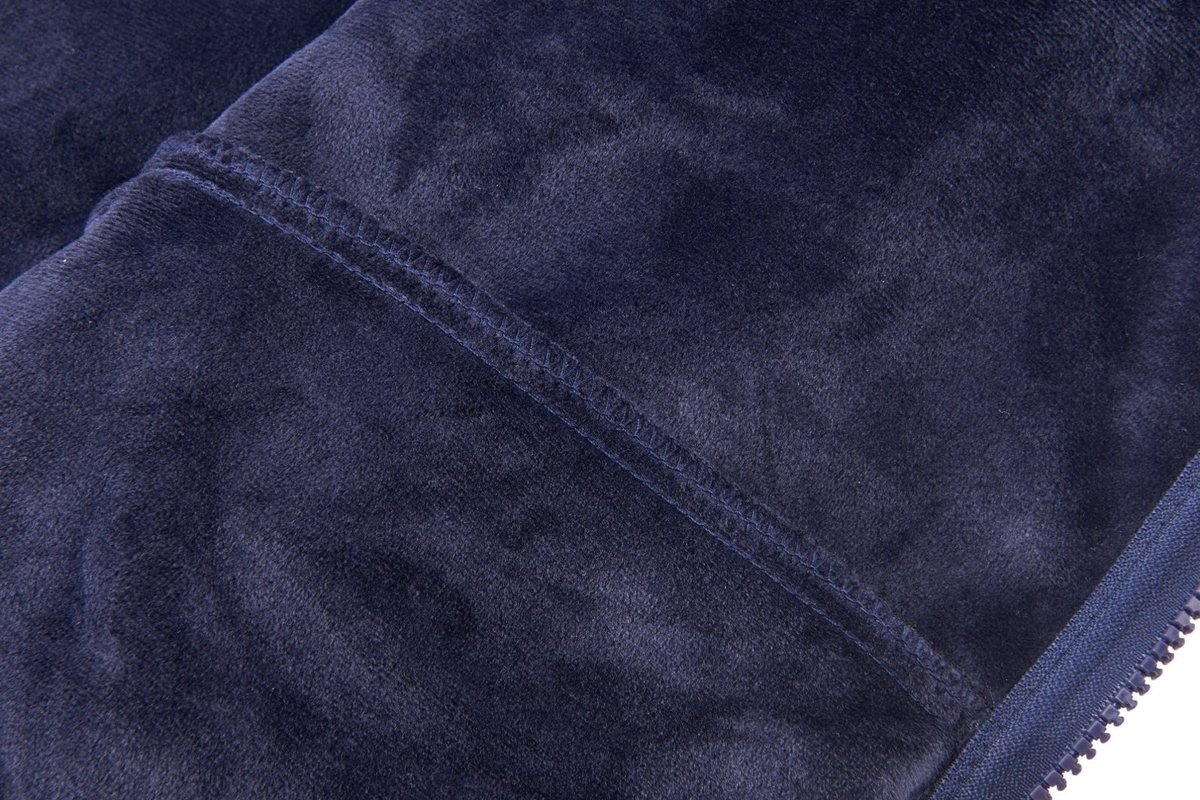
- Fleece is a synthetic knit (typically polyester) that traps air between brushed fibers
That single distinction drives every other difference between these two categories.
Warmth-to-Weight: Down Wins Decisively
Down has the highest warmth-to-weight ratio of any insulation material on the planet. A 100-gram fill of 800 fill-power goose down provides roughly the same warmth as 200-300 grams of synthetic fleece insulation.
Practical translation for your product line:
– A 400g down jacket can keep wearers comfortable down to -10°C / 14°F
– A 400g fleece will struggle below 0°C / 32°F
If your brand targets winter sports, expedition wear, or premium puffer aesthetics → down is your answer.
Wet Performance: Fleece Wins Decisively
This is where the trade-off flips hard.
When down gets wet, it collapses. The 3D clusters that trap air mat together, losing 80-90% of insulating value. Worse, wet down takes hours (sometimes days) to dry. In a wet environment, a soaked down jacket becomes dangerous — not just useless, but actively harmful to body temperature regulation.
Fleece, by contrast, retains 70-80% of its insulating value when wet. It also dries in a fraction of the time — usually 30-90 minutes of body heat is enough to wear it dry.
For brands targeting:
– Hiking in wet climates (UK, Pacific Northwest, Norway) → fleece
– Wet sports (sailing, fishing, kayaking) → fleece
– Layering systems with hardshell waterproof outers → fleece (better moisture management)
Packability: Down Wins Again
Down compresses to roughly 1/4 the volume of equivalent-warmth fleece.
For travel brands, ultralight hiking lines, and packable everyday jackets, this matters enormously. A 600g 800-fill down jacket compresses to roughly the size of a 1L water bottle. Fleece of equivalent warmth would fill a 4L stuff sack.
Cost: Fleece Wins (Mostly)
Raw material costs roughly:
– Standard 90/10 duck down (650 fill power): $40-80/kg
– Premium goose down (800+ fill power, RDS certified): $120-250/kg
– 200gsm polar fleece: $4-8/kg
– 300gsm Polartec Power Stretch: $15-30/kg
A typical mid-fill (200g) down jacket has $15-30 of raw down in it. The same jacket in fleece has $3-8 of raw fleece. Down jackets also require down-proof fabrics (high-thread-count nylon or polyester to prevent feathers from poking through), adding $2-5/jacket more.
End result: Down jackets typically cost 3-5x more to produce than fleece equivalents at the same retail tier.
Durability and Lifespan
| Factor | Down | Fleece |
|---|---|---|
| Lifespan with care | 10-15 years | 5-8 years |
| Pilling | Doesn’t pill | Pills over time, especially cheap variants |
| Wash frequency tolerance | Low (degrades fill over washes) | High (machine washable repeatedly) |
| Repair cost | High (specialty repair) | Low (DIY patch) |
For brands building heirloom outdoor products, down has the longer lifespan. For brands targeting daily-use casual outdoor wear, fleece wins on tolerance and replacement economics.
Ethical and Sustainability Considerations
Down has historically had welfare concerns (live-plucking, force-feeding). Modern responsible brands source RDS (Responsible Down Standard) or DOWNPASS certified down, which traces supply chains back to humanely-treated birds. Adds $2-5/jacket in cost but is now table-stakes for EU/US markets.
Fleece has its own issues: it sheds microplastics in every wash. Brands targeting sustainability-conscious consumers should look at:
– Recycled polyester fleece (rPET) — same performance, lower carbon footprint
– PET-free wool fleece blends — higher cost, fully biodegradable
The “Both” Answer: 3-in-1 Jackets
Many outdoor brands skip the either/or and build 3-in-1 jackets — a hardshell outer + a removable insulated liner. The liner is typically fleece (for wet-climate brands) or lightweight down (for premium / cold-climate brands).
This format lets one product cover 3 weather profiles:
1. Outer shell alone — rain protection
2. Liner alone — mid-warmth
3. Both together — maximum warmth
3-in-1 jackets are one of the highest-margin categories in outdoor apparel, with retail prices typically 1.5-2x a single-construction jacket.
Decision Framework for Brand Owners
| Your brand targets… | Choose… |
|---|---|
| Premium puffers, expedition wear, urban cold | Down |
| Wet climates, water sports, layering systems | Fleece |
| Maximum versatility, premium retail tier | 3-in-1 |
| Entry-price casual outdoor | Fleece (cost-effective) |
| Ultralight backpacking | Down (weight matters) |
| Sustainability-focused | Recycled fleece or RDS down |
Bottom Line
Neither material is “better.” They serve different jobs. Most successful outdoor brands eventually carry both — a fleece mid-layer for layering systems and a down puffer for premium cold-weather pieces.
If you’re launching a single hero product on a tight budget, fleece is the safer bet: lower production cost, easier to manufacture, more forgiving on the end customer.
If you’re targeting premium retail tiers with a brand story around heritage and performance, down delivers the perceived luxury and technical credibility.
Building your first outdoor mid-layer product?
ptoutwear manufactures both fleece and down mid-layers, including 3-in-1 jacket systems, with 30-piece MOQ and a 1-piece sample policy. We source RDS-certified down and recycled polyester fleece for sustainability-focused brands.
Discuss your product spec → (24-hour response)
Insulated jacket capabilities →
3-in-1 jacket development →