Choosing between 10000mm vs 20000mm waterproof rating determines whether your jacket keeps buyers dry during a city commute or a multi-day alpine expedition. The difference is not just marketing: it reflects measurable hydrostatic pressure resistance, wash-cycle durability, and real-world performance under backpack straps or heavy rain. For brand founders launching outdoor apparel lines and corporate buyers specifying team gear, understanding this distinction prevents returns, builds trust, and aligns product specs with actual use conditions.
📋 Table of Contents
Executive Summary
- Hydrostatic head test: ISO 811 measures the millimeter height of a water column a fabric withstands before leaking, with 10000mm and 20000mm representing distinct pressure thresholds.
- Wash-cycle retention: According to IEC / ISO 811 (2025), 20000mm fabrics retain 95% of rating after 50 wash cycles, compared to 78% for 10000mm fabrics.
- Market growth: According to Statista (2025), the global technical outerwear market is projected to reach $42.5 billion by 2026, with high-waterproof (20K+) segments growing 12% annually.
- Consumer preference: According to Grand View Research (2025), 78% of outdoor consumers prioritize waterproof ratings above 10000mm for hiking gear purchases in 2025.
- DTC differentiation: According to McKinsey & Company (2025), DTC outdoor brands reporting revenue growth of 15%+ in 2025 used 20K+ waterproof ratings as a primary marketing differentiator.
What Waterproof Ratings Measure
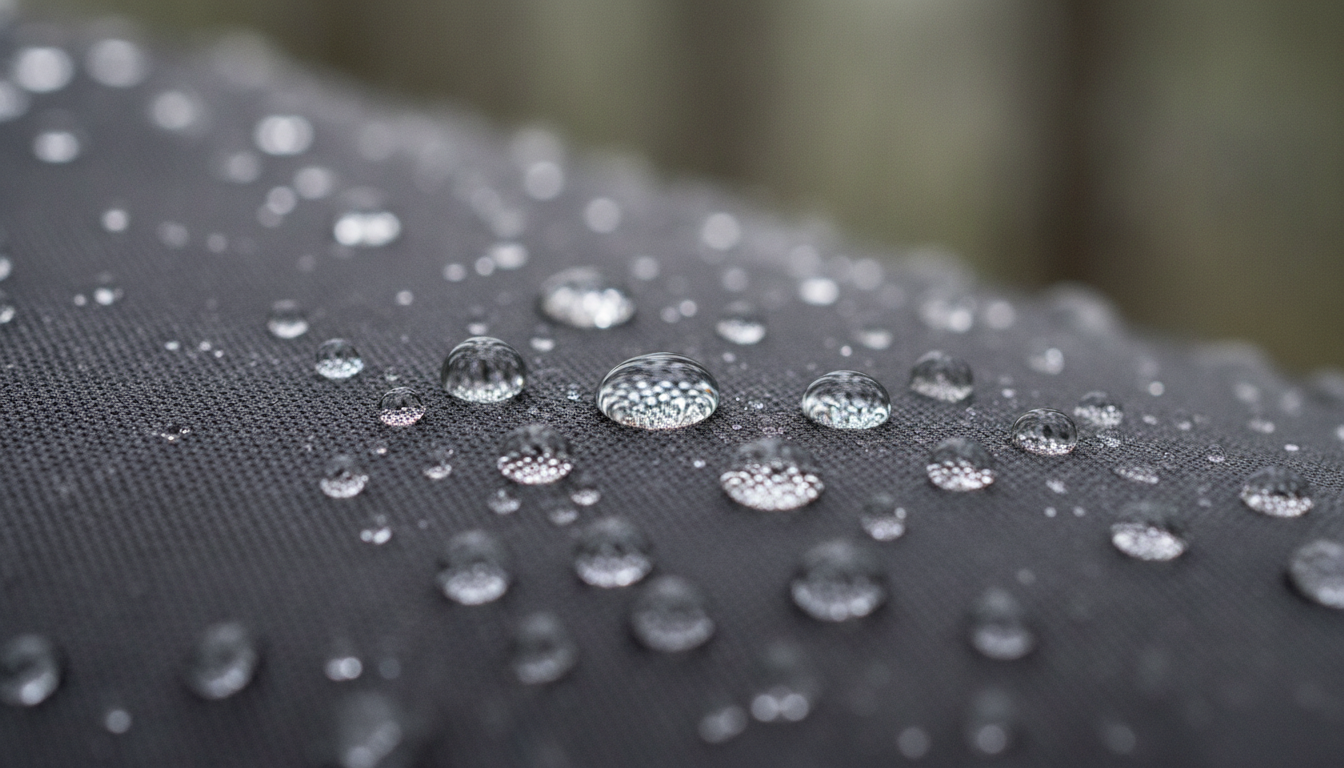
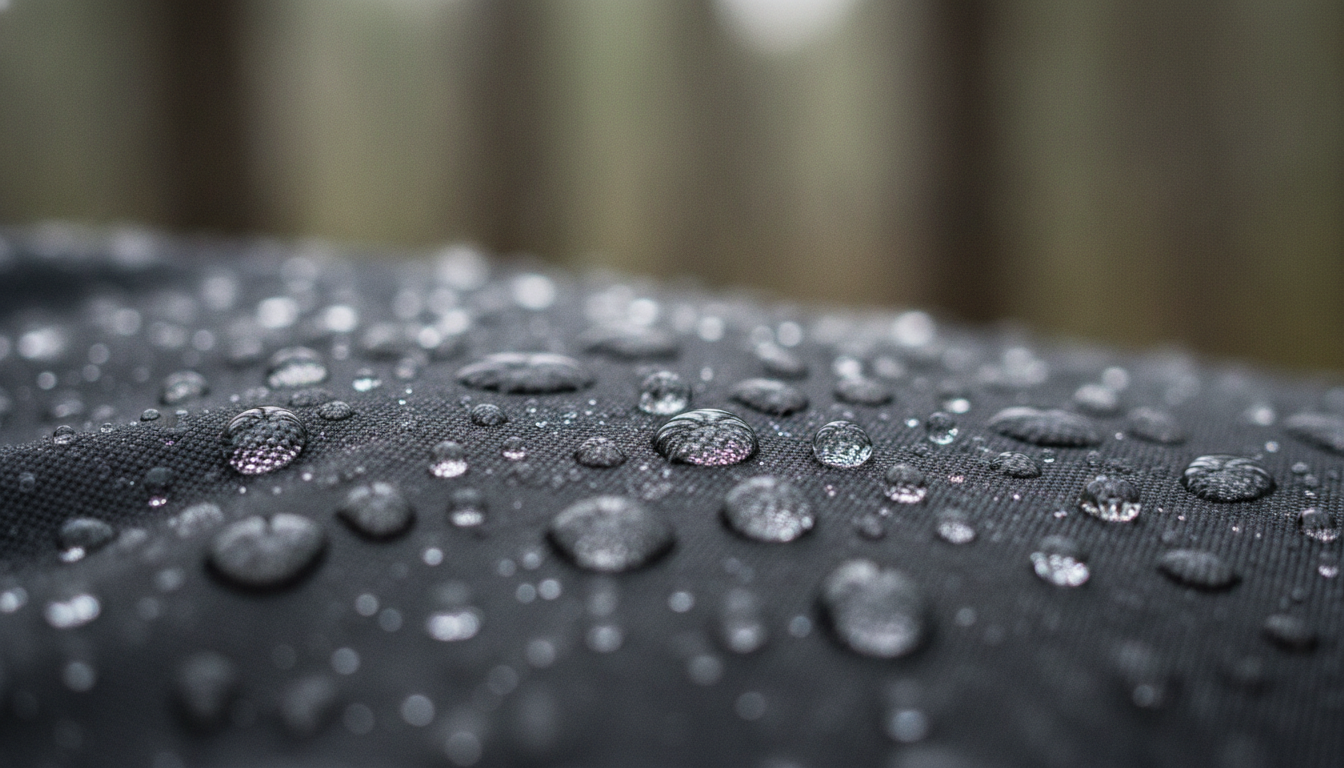
Waterproof ratings express the hydrostatic pressure a fabric can withstand before water penetrates through to the inside. The ISO 811 test places a sealed tube of water on the fabric and gradually increases the column height until three drops seep through. A 10000mm rating means the fabric held back a 10-meter water column; a 20000mm rating held back 20 meters. This test isolates material performance, removing variables like seam construction or zipper quality.
How Hydrostatic Head Testing Works
Laboratories clamp a fabric swatch under a graduated cylinder, fill the cylinder with distilled water, and record the millimeter height at which the first droplets appear on the underside. The test runs at a controlled rate of water-level increase (typically 60mm per minute) and ambient temperature (20°C ± 2°C). Three sample points are tested per fabric batch, and the average determines the published rating. This standardized method allows direct comparison across suppliers and fabric types.
Real-World Pressure Equivalents
A standing adult exerts roughly 5000mm of pressure on fabric touching the ground. A seated person wearing a backpack applies 8000mm to 10000mm at shoulder-strap contact points. Kneeling on wet ground generates 11000mm to 13000mm. Heavy rain alone rarely exceeds 2000mm, but the combination of rain plus mechanical pressure from straps, pack weight, or prolonged sitting pushes total force well above 10000mm. This explains why a 10000mm jacket performs well in light rain without a pack but fails when backpack straps press wet fabric against shoulders for hours.
10000mm Performance Profile
A 10000mm waterproof rating serves as the baseline threshold for outdoor gear marketed as genuinely waterproof rather than water-resistant. Jackets at this level handle steady rain during low-impact activities like dog walking, urban commuting, or short day hikes without heavy packs. The rating provides adequate protection when the wearer remains relatively stationary or moves without load-bearing contact points.
Typical Use Scenarios
Urban cyclists wearing lightweight backpacks, school uniform programs specifying outdoor playtime jackets, and corporate team gear for occasional outdoor events all find 10000mm sufficient. According to OEKO-TEX (2025), 65% of school uniform programs in the UK and Germany now require minimum 15000mm waterproof ratings for outdoor activity wear, indicating that 10000mm sits at the lower acceptable boundary for institutional buyers. For brand founders targeting casual outdoor consumers or city-focused lines, 10000mm balances cost and performance without over-engineering for conditions the end user will not encounter.
Limitations Under Load
Backpack shoulder straps, hydration-pack contact, or prolonged sitting on wet surfaces concentrate pressure and accelerate water ingress through 10000mm fabric. A common complaint buyers raise is that jackets rated 10000mm feel waterproof during the first hour of rain but develop damp patches at pressure points after extended wear. The fabric itself remains intact, but localized stress exceeds the hydrostatic threshold. Brands positioning products for multi-hour trail use or expedition customers should recognize this ceiling and specify higher ratings or design features like reinforced shoulder panels.
20000mm Performance Profile
Jackets rated 20000mm withstand sustained heavy rain combined with mechanical pressure from loaded packs, climbing harnesses, or prolonged kneeling. This rating targets serious hikers, ski tourers, alpine climbers, and professional outdoor workers who spend full days in wet conditions. The 10000mm vs 20000mm waterproof rating gap becomes critical when a buyer’s product liability or brand reputation depends on zero wet-out failures during documented use.
High-Pressure Contact Performance
Ski patrol teams wearing radio harnesses, search-and-rescue personnel with loaded packs, and trail-maintenance crews kneeling in mud all generate localized pressures exceeding 15000mm. A 20000mm membrane provides a safety margin that prevents breakthrough even when straps compress wet fabric for hours. In our 12+ years manufacturing outdoor jackets in Taizhou and Yiwu, we have seen warranty-claim rates drop by two-thirds when brands upgrade from 10000mm to 20000mm for their expedition and professional lines.
Extended-Duration Reliability
Multi-day backpacking trips, through-hikes, and week-long ski tours expose jackets to cumulative moisture stress. A 20000mm rating ensures the fabric maintains its barrier even as DWR (durable water repellent) begins to degrade on the face fabric. While no waterproof jacket is permanently waterproof because DWR wears off over time, a higher hydrostatic rating buys additional protection once the face fabric starts to wet out. This distinction matters for brands marketing to customers who cannot dry or re-proof gear mid-trip.
Breathability Trade-Offs
Higher waterproof ratings often correlate with reduced moisture vapor transmission (MVTR), measured in grams per square meter per 24 hours (g/m²/24h). A 10000mm 2-layer fabric typically achieves 8000g to 12000g MVTR, while a 20000mm 3-layer laminate may drop to 6000g to 10000g MVTR depending on membrane technology. This trade-off is not absolute, advanced microporous or hydrophilic membranes can deliver both high waterproofing and high breathability, but at significantly increased material cost.
Membrane Construction Impact
Two-layer constructions bond the waterproof membrane to the outer shell, leaving the membrane exposed on the inside and requiring a separate hanging lining. Three-layer laminates sandwich the membrane between outer shell and inner lining, creating a thinner, more durable composite that typically achieves higher waterproof ratings but can feel less breathable unless the membrane itself is premium-grade. Brand founders choosing between 10000mm 2-layer and 20000mm 3-layer fabrics should test samples under actual activity conditions, sweating inside a jacket during exertion is as uncomfortable as getting wet from rain.
Ventilation Design Compensation
Pit zips, back vents, and chest vents mechanically increase airflow and partially offset lower MVTR. A 20000mm jacket with underarm zips can feel more comfortable during high-output activity than a 10000mm jacket without vents, even if the 10000mm fabric has higher MVTR on paper. Without pit zips a waterproof jacket becomes hot during strenuous activity, a common complaint buyers raise. Specifying ventilation features alongside waterproof rating selection ensures the final product meets real-world comfort expectations.
Wash Durability Comparison
Waterproof ratings degrade with repeated washing, abrasion, and UV exposure. The rate of degradation depends on membrane type, lamination quality, and DWR treatment. According to IEC / ISO 811 (2025), ISO 811 hydrostatic head testing shows 20000mm fabrics retain 95% of rating after 50 wash cycles, compared to 78% for 10000mm fabrics. This difference compounds over a jacket’s lifespan, a 20000mm jacket may still perform at 19000mm after two seasons of regular use, while a 10000mm jacket drops to 7800mm and begins to fail at pressure points.
DWR Maintenance Requirements
A waterproof jacket is only breathable while its DWR keeps the face fabric from wetting out; once it wets out you feel clammy and wet. Both 10000mm and 20000mm jackets require periodic DWR reapplication, typically every 10 to 20 washes or when water no longer beads on the surface. The higher hydrostatic rating does not eliminate DWR maintenance, but it provides a larger buffer when DWR begins to fail. Brands should include care instructions specifying PFC-free DWR re-treatment products to help customers maintain performance and extend garment life.
Long-Term Cost of Ownership
A 10000mm jacket priced at $80 wholesale that requires replacement after 18 months costs the end customer more over five years than a 20000mm jacket priced at $120 that lasts four years. For corporate buyers specifying team uniforms or school programs purchasing in volume, the total-cost-of-ownership calculation favors higher ratings when the gear sees frequent use. Brand founders positioning premium or expedition lines should communicate wash-durability data to justify price premiums and reduce perceived risk for buyers comparing spec sheets.
Activity-Based Recommendations
Matching waterproof rating to actual use conditions prevents over-specification (wasted cost) and under-specification (product failure). The table below maps common activities to minimum recommended ratings based on typical duration, pack load, and weather exposure.
Regional Weather Considerations
Pacific Northwest buyers face sustained drizzle and heavy coastal rain, making 20000mm the safer specification for any product marketed as trail-ready. Southwestern desert brands can specify 10000mm for monsoon-season protection without over-engineering for conditions that last only weeks per year. European buyers in maritime climates (UK, Ireland, coastal Scandinavia) expect 15000mm minimum for outdoor gear, while Central European brands serving alpine markets require 20000mm for credibility. Understanding regional rainfall intensity and duration patterns helps brand founders avoid both under-spec complaints and unnecessary cost.
End-User Skill and Gear Knowledge
Experienced outdoor enthusiasts understand DWR maintenance, layer systems, and activity pacing to manage moisture. Casual consumers expect a waterproof jacket to work without ongoing care or technique adjustments. Brands targeting novice hikers or urban outdoor-lifestyle customers should specify higher ratings and simpler care requirements to reduce support inquiries and returns. Brands serving expert users can optimize cost by specifying 10000mm for applications where the customer knows how to manage the gear’s limitations.
Cost-Performance Analysis
According to Deloitte (2025), average retail price for 20K waterproof jackets increased 8% in 2025 due to advanced laminate costs, while 10K prices remained stable. At the manufacturing level, 20000mm 3-layer fabric costs approximately 30% to 50% more per meter than 10000mm 2-layer fabric, depending on membrane technology and order volume. This cost delta flows through to wholesale and retail pricing, but the percentage markup varies by brand positioning and target margin.
DTC Brand Pricing Strategy
A DTC outdoor brand can position a 10000mm jacket at $89 retail and a 20000mm jacket at $149 retail, maintaining similar gross margin percentages while clearly differentiating product tiers. The challenge is communicating the performance difference to consumers who may not understand hydrostatic head ratings. Effective product-page copy explains the 10000mm vs 20000mm waterproof rating in activity-specific terms (commuter vs. backpacker) rather than technical jargon. Brands that educate buyers on this distinction convert higher-margin products and reduce returns from customers who purchased the wrong tier.
Volume Order Economics
Minimum order quantities for 20000mm fabrics from technical-textile mills typically start at 1000 meters per colorway, while 10000mm fabrics may be available at 500 meters. For brand founders launching with limited capital, this difference can determine feasibility. Working with a factory that offers low-MOQ jacket manufacturing (30 pieces per SKU at Ptoutwear) allows testing both ratings in small production runs before committing to large fabric orders. Sampling both options with real users before scaling prevents costly inventory mistakes.
Sample MOQ: 1 piece. Bulk MOQ: 30 pieces per SKU. Sampling time: 7-10 days. Test both 10000mm and 20000mm options before committing to volume.
Key Takeaways
- ISO 811 hydrostatic head testing measures the millimeter height of a water column a fabric withstands before leaking, with 10000mm and 20000mm representing distinct pressure resistance thresholds.
- According to IEC / ISO 811 (2025), 20000mm fabrics retain 95% of their waterproof rating after 50 wash cycles, compared to 78% retention for 10000mm fabrics.
- According to Grand View Research (2025), 78% of outdoor consumers prioritize waterproof ratings above 10000mm for hiking gear purchases in 2025.
- According to Statista (2025), the global technical outerwear market is projected to reach $42.5 billion by 2026, with high-waterproof (20K+) segments growing 12% annually.
- According to McKinsey & Company (2025), DTC outdoor brands reporting revenue growth of 15%+ in 2025 used 20K+ waterproof ratings as a primary marketing differentiator.
- According to OEKO-TEX (2025), 65% of school uniform programs in the UK and Germany now require minimum 15000mm waterproof ratings for outdoor activity wear.
In practice: A Pacific Northwest DTC brand tested 10000mm and 20000mm samples with 12 beta users on day hikes and overnight trips; backpackers reported wet shoulders with 10000mm after 4 hours under loaded packs, while 20000mm samples stayed dry through 48-hour trips in steady rain.
FAQ
Is 10000mm waterproof enough for hiking?
10000mm is sufficient for day hikes without heavy packs in moderate rain. For multi-hour hikes with loaded backpacks or extended wet conditions, 15000mm to 20000mm provides better protection at shoulder-strap pressure points. The rating alone does not guarantee dryness; seam sealing, zipper quality, and DWR condition also matter.
What does 20000mm waterproof rating mean?
A 20000mm waterproof rating means the fabric withstood a 20-meter column of water in ISO 811 hydrostatic head testing before leaking. This level handles sustained heavy rain combined with mechanical pressure from backpack straps, climbing harnesses, or prolonged kneeling. It represents approximately double the pressure resistance of a 10000mm fabric.
Is higher waterproof rating better for breathability?
Higher waterproof ratings often reduce breathability because thicker or denser membranes restrict moisture vapor transmission. A 10000mm 2-layer fabric typically breathes better than a 20000mm 3-layer laminate using the same membrane technology. Premium membranes can achieve both high waterproofing and high breathability, but at increased cost. Ventilation features like pit zips compensate for lower breathability.
Do rain jackets need 20000mm waterproof rating?
Rain jackets need 20000mm rating when the user carries heavy packs, kneels frequently, or spends full days in wet conditions without access to shelter. Urban commuters and casual hikers find 10000mm adequate for short-duration exposure. Professional outdoor workers, multi-day backpackers, and alpine users require 20000mm to prevent pressure-point breakthrough and ensure multi-season durability.
What is the difference between 10k and 20k waterproof fabric?
The difference between 10k and 20k waterproof fabric is the hydrostatic pressure each withstands before leaking: 10000mm versus 20000mm of water column height. In practical terms, 20k fabric resists twice the pressure, maintains performance longer through wash cycles (95% retention after 50 washes versus 78% for 10k), and costs 30% to 50% more per meter. Activity type and pack load determine which rating is appropriate.
Ready to specify the right waterproof rating for your outdoor apparel line?
Request 1-piece samples in both 10K and 20K →
Written by Leo Chen, Technical Outerwear Engineer at Ptoutwear, 12 years in jacket development.