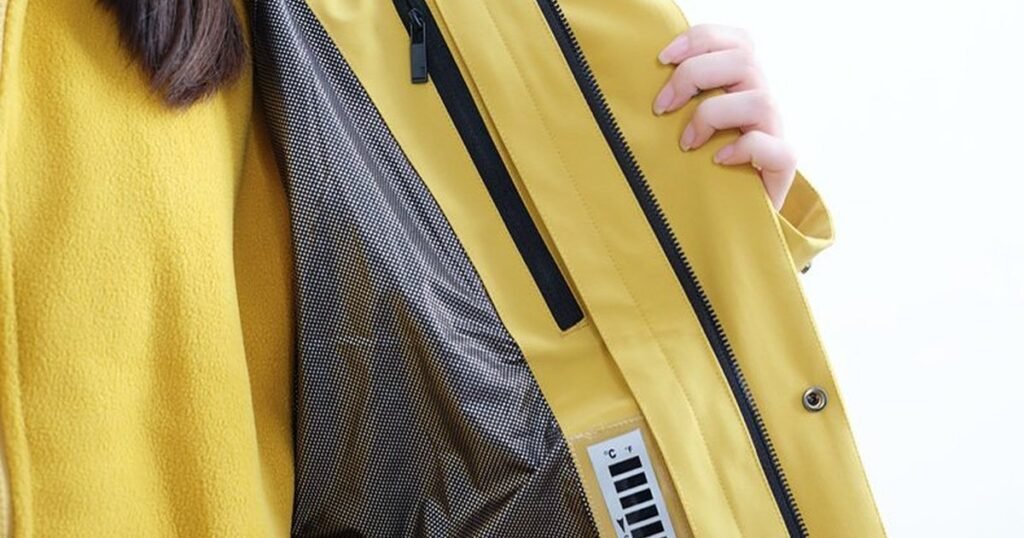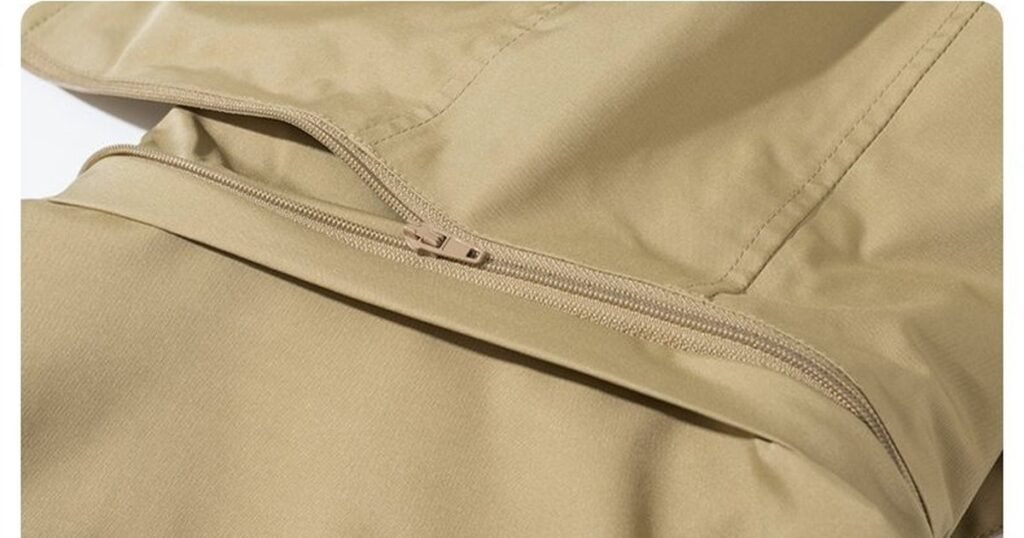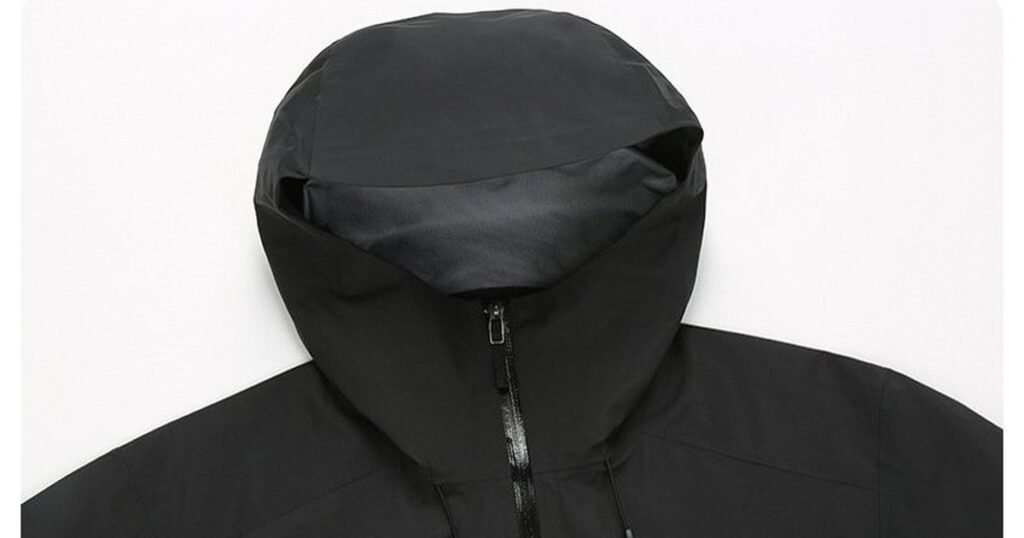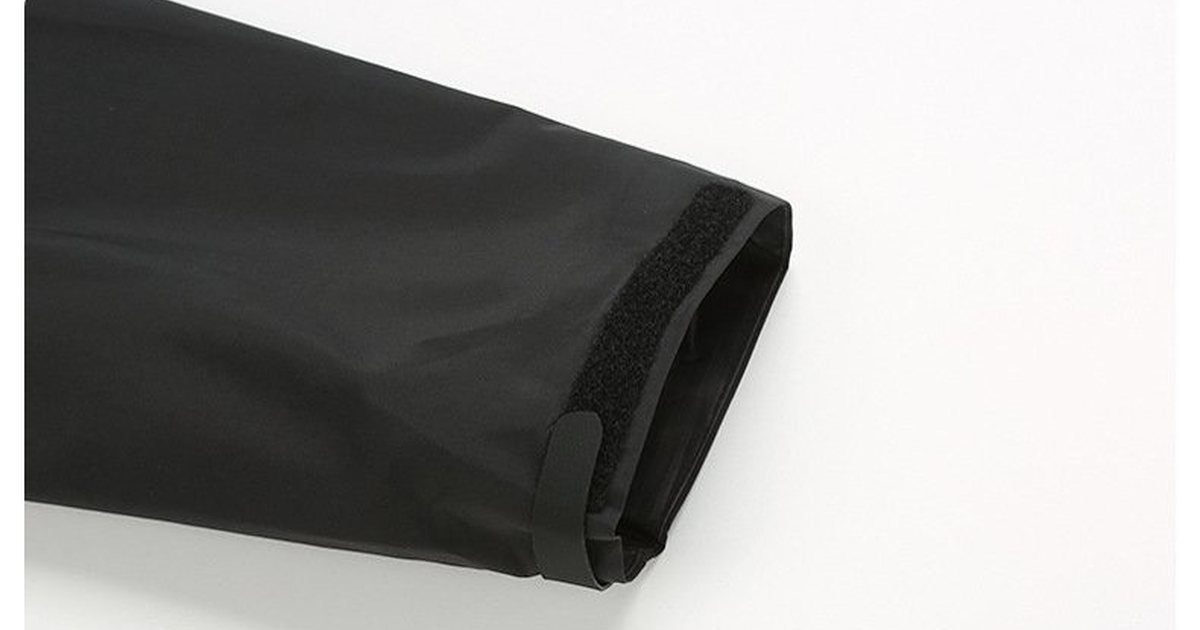
A “taped seams jacket” is one of the most common terms on outdoor product pages — and one of the least understood by the brands ordering them. If you’re sourcing custom waterproof outerwear, knowing what taped seams actually are (and how to verify a factory does them right) is the difference between a jacket that holds up and one that leaks at the first seam.
This guide explains what a taped seams jacket is, how the taping is done, and what to require from a manufacturer.
What a Taped Seams Jacket Actually Is
Every sewn seam has thousands of needle holes from the stitching. On a waterproof fabric, those holes are open channels — water seeps straight through them no matter how high the fabric’s waterproof rating is. A jacket rated 20,000mm leaks at the seams if nothing seals them.
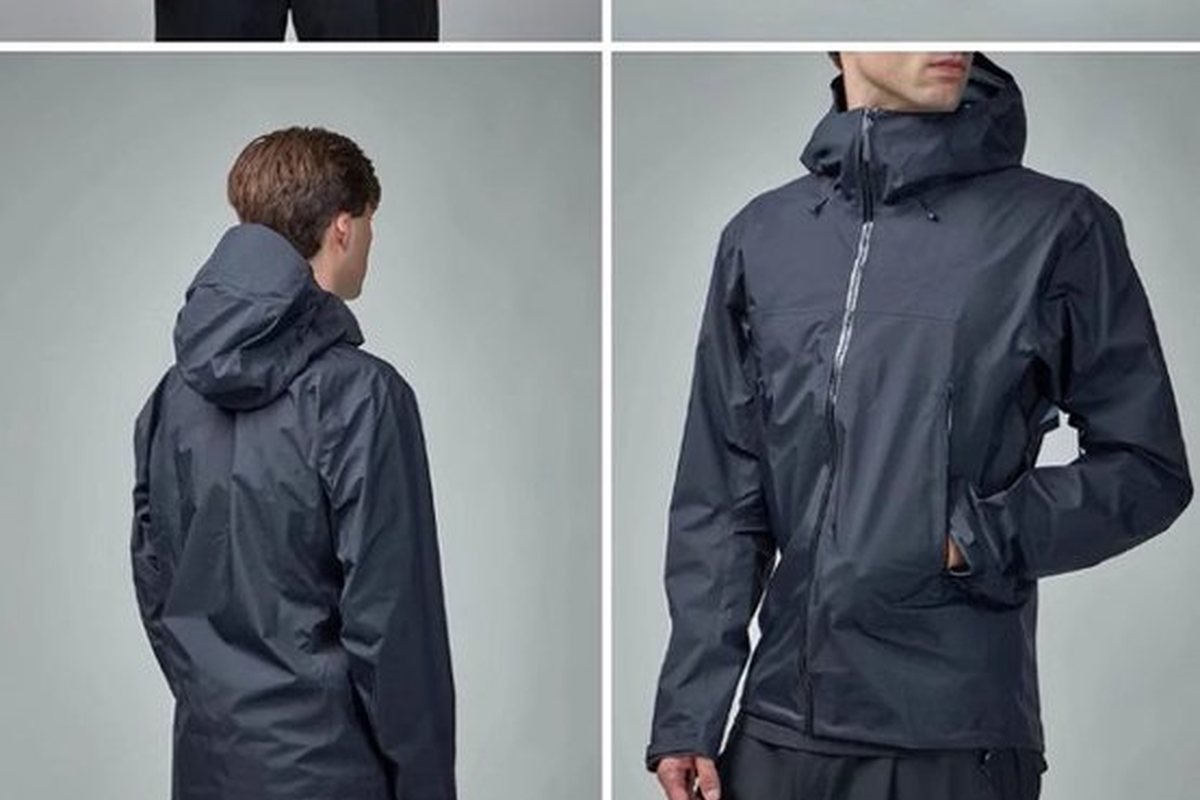
A taped seams jacket has a strip of waterproof tape bonded over the seam allowance on the inside of the garment, closing off every needle hole. That tape is what turns a “waterproof fabric” into a genuinely waterproof jacket.
You’ll also see this called seam-sealed or heat-sealed seams — same process.
How Seam-Taping Is Done
Taping happens after the garment is sewn, on a dedicated seam-sealing machine. Three things have to be controlled:
- Heat — typically 140–180°C to activate the tape adhesive.
- Pressure — a heated roller presses the tape onto the seam.
- Dwell time — the tape must bond under controlled speed, not rushed.
Get any of the three wrong and the tape bubbles, gaps, or peels off after a few washes. This is why seam-taping is the step that separates a real waterproof manufacturer from a factory that just sews shells and outsources the sealing.
The tape itself matters too: quality production uses 3-layer waterproof tape (carrier film + adhesive + backing) in 13–22mm widths. Single-layer economy tape delaminates in the wash.
Fully Taped vs Critically Taped — Which Does Your Jacket Need?
Not every taped seams jacket seals every seam. There are two approaches:
- Fully taped — every seam in the garment is sealed (body, hood, zippers, pockets, hem). The spec for true hardshells and premium rain jackets.
- Critically taped — only the highest-exposure seams (shoulders, hood) are sealed; lower-exposure seams are left to the DWR finish. Adequate for light-rain and urban products at lower price points.
Which one your product needs depends on use case and price point. We break the decision down — including the cost difference and real-world performance — in fully taped vs critically taped seams.
Taped Seams Are Only Half the Waterproofing Story
Seam-taping seals the stitching, but two other details decide whether a jacket actually keeps water out:
- Waterproof zippers. A standard zipper is an open channel; a taped seams jacket with an untreated zipper still leaks down the front.
- Breathability. A fully sealed jacket that can’t release sweat vapor soaks you from the inside. Taping and breathability have to be specced together — see waterproof vs breathable jacket.
A jacket is only as waterproof as its weakest detail. Confirm the factory controls all of them.
Why In-House Seam-Taping Matters When You Source
Here’s the corner most buyers don’t catch: many “manufacturers” sew the garment but send it out for taping. Outsourced taping means no control over heat, pressure, or QC — and it’s the single most common reason production jackets fail waterproof testing.
When you source a taped seams jacket, ask one direct question: do you tape in-house, and how many machines? A factory that owns the equipment owns the quality.
PTOUTWEAR runs 5 in-house seam-taping machines alongside 3 waterproof-zipper machines, so taping and zipper sealing are controlled on our own floor — not subcontracted. Every order can include post-production adhesion checks.
What to Specify in Your Tech Pack
Don’t just write “taped seams” on the brief. Specify:
- Taping approach — fully taped or critically taped (and which seams if critical).
- Tape width — 13mm (standard), 18–22mm (premium, longer-lasting).
- Waterproof rating — 10,000mm (standard) or 20,000mm (Pro).
- Zippers — waterproof / storm-flapped.
- DWR finish — PFC-free if you sell into the EU or eco-conscious markets.
- Adhesion testing — peel resistance after wash cycles.
A capable factory builds to any of these tiers — the right combination is driven by your customer’s use case and price point, not by what’s cheapest to produce.
Sourcing a Custom Taped Seams Jacket
PTOUTWEAR is a custom waterproof outerwear manufacturer in Zhejiang, China, building hardshell, rain, and softshell jackets to your chosen seam and waterproof spec — with in-house seam-taping (5 machines), waterproof zippers, and PFC-free DWR, ISO 9001 and SGS tested.
- MOQ: 30 pieces (1-piece sampling)
- Lead time: 4 weeks (rush: 1,000 pcs in 2 weeks)
- Branding: embroidery, print, heat transfer, woven labels — all in-house
See our custom hardshell jackets or request a sample with your target seam and waterproof spec.