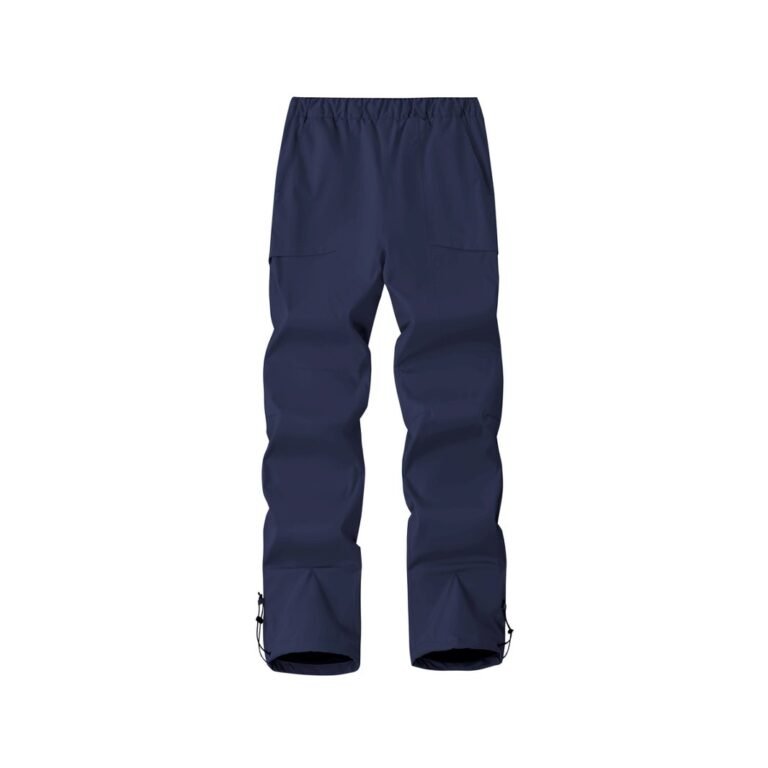
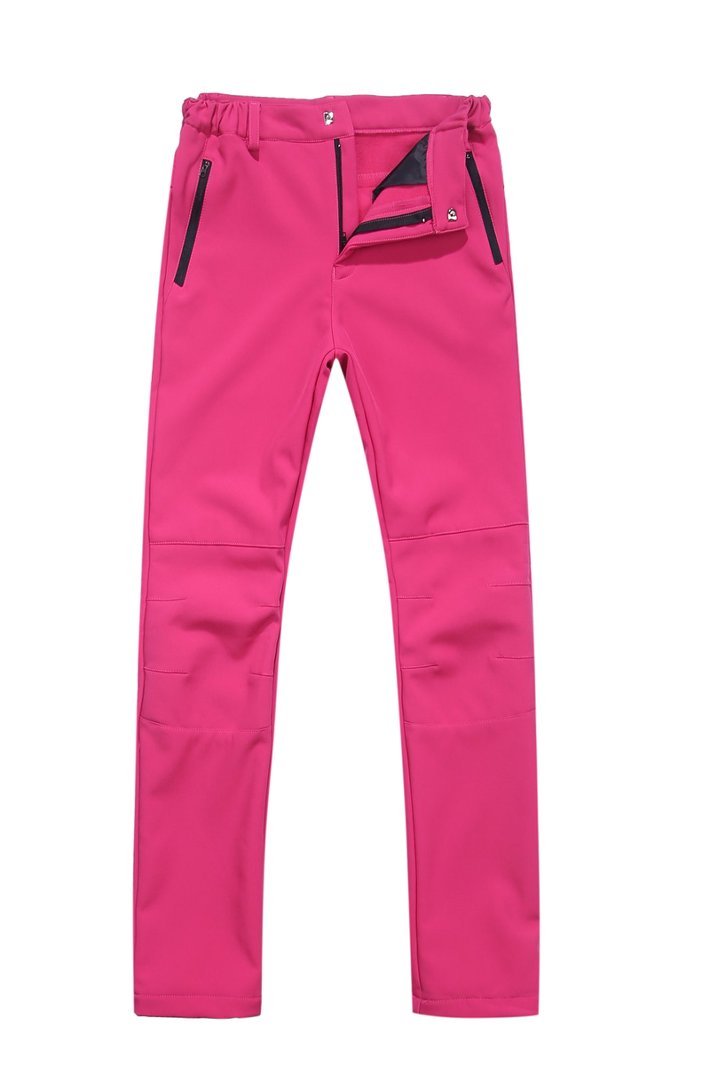
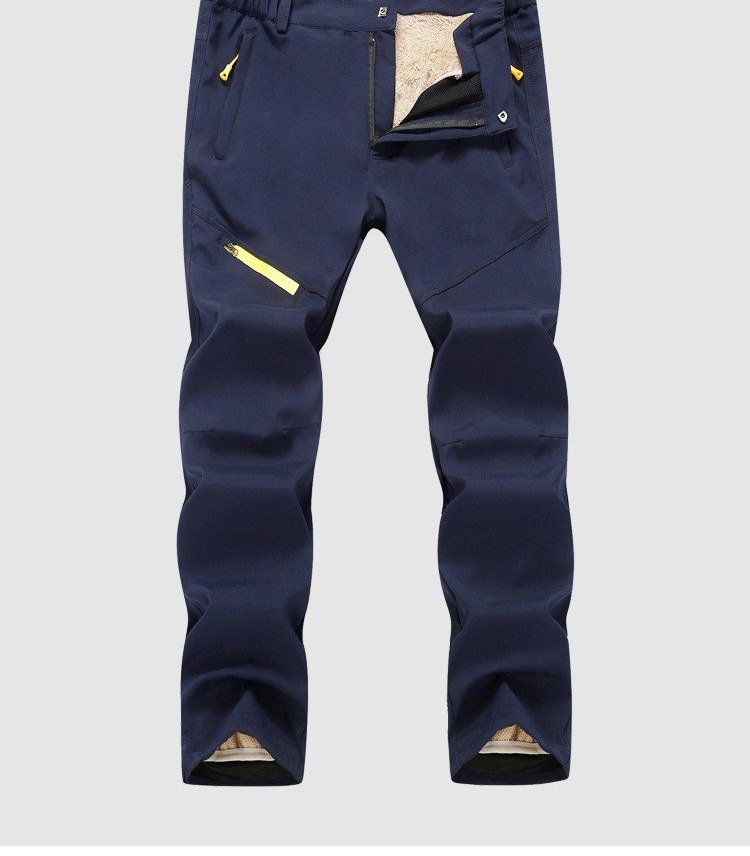
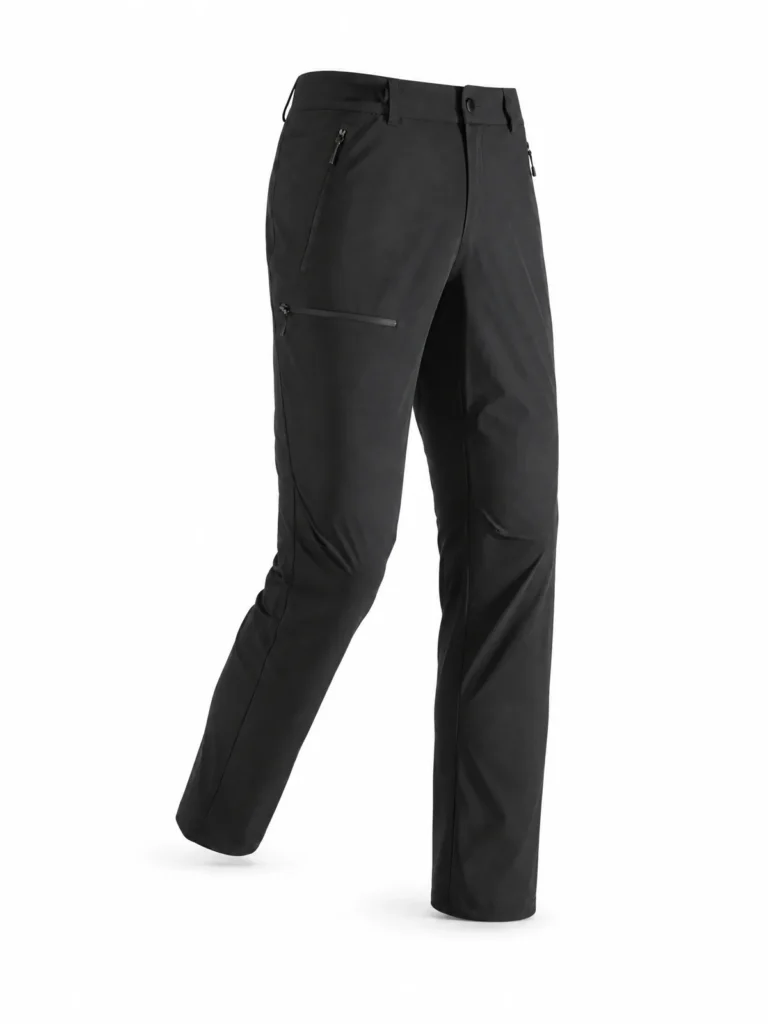
Wide-fit climbing pants, stretch hiking trousers, reinforced work trousers and technical cargo — built on the same softshell, laminate and seam-taping lines as our snow pants, patterned for the ground instead of the lift. 10-piece MOQ per style (mix colors and sizes), one-piece sample in 7-10 days.
What changes from our snow pants, and what stays the same
Buyers write to us with a garment name — "wide-fit climbing pant", "technical trouser", "cargo" — and the name already decides most of the spec. These are the four programs this line covers, in the words buyers use.
Wide or straight leg, gusseted crotch, high stretch, articulated knee, low-profile waist that sits under a harness. Stretch woven or 4-way stretch softshell face, no membrane. Abrasion at knee and seat is the spec that matters; waterproofing is not.
Slimmer articulated cut, lighter stretch woven, PFC-free DWR for showers, zip or roll-up options, zip security pocket. The widest-selling program in this line — most retail buyers of outdoor pants are buying for trails, not for storms.
Heavier face fabric, Cordura or double-layer reinforcement at knee and hem, kneepad pocket, tool and phone pockets, triple-stitched load seams, hi-vis or reflective trim where the site requires it. Durability minutes, not breathability grams, drive the cost.
The baggy-cargo pattern we already cut for snowboard pants, moved onto a lighter non-insulated stretch or ripstop face — bellows pockets, drop-crotch or straight, adjustable hem. Decoration-heavy: woven labels, high-density embroidery, heat transfer.
Not in this line: denim, leather, pure knit joggers and printed promotional pants. Those are different factories with different machines. See what we make and what we decline.
| Axis | Wide-Fit Climbing | Hiking / Trekking | Work Trouser | Technical Cargo / Street |
|---|---|---|---|---|
| Fabric family | Stretch woven (nylon/elastane or polyester/elastane) or 4-way stretch softshell, unlined | Lightweight stretch woven, PFC-free DWR | Heavyweight woven or bonded softshell, 240–360 gsm band we already run for jackets | Ripstop or stretch woven; 2L laminate only if a waterproof cargo is the brief |
| Stretch | 4-way, the defining spec — high-step and heel-hook without pull | 2-way or 4-way | Mechanical stretch or none; durability first | 2-way typical |
| Weather protection | DWR optional; no membrane | PFC-free DWR standard; membrane only for rain-pant programs | DWR optional; waterproof over-trouser is a separate garment | DWR; taped 2L only on request |
| Waterproof / breathability figures | Not specified — not a waterproof garment | Our build spec on request: [TEST REPORT PENDING] per lot | Not specified unless a rain-work program | Our build spec on request: [TEST REPORT PENDING] per lot |
| Knee & seat construction | Articulated knee, gusseted crotch, seat panel without centre seam abrasion point | Articulated knee, gusset | Articulated knee, Cordura or double-layer knee, kneepad pocket, reinforced seat | Articulated or straight; knee darts for drop-crotch cut |
| Waist & hem | Low-profile elastic or integrated belt that sits under a harness; drawcord or elastic hem | Belt loops or integrated belt; zip or snap hem; roll-up tab | Heavy belt loops, hammer loop; straight hem with reinforcement | Elastic or drawcord hem; adjustable snap hem |
| Pockets | Low-bulk hand pockets, one zip thigh pocket, no bulk at harness line | Zip hand pockets, zip security thigh pocket | Tool pockets, phone pocket, kneepad access, ruler pocket | Bellows cargo pockets, zip secure pocket |
| Seams | Flat-felled or bound on high-stretch seams; bar-tacks at gusset and pocket ends | Flat-felled main seams; bar-tacks | Triple-stitched load seams, bar-tacks at every stress point | Flat-felled; taped only on laminate versions |
| Carries over from our snow-pant line | Articulated knee pattern, gusset | Articulated knee, zip vents on request | Cordura scuff-guard construction | Baggy-cargo block, zip thigh vents, adjustable hem |
Three of the four programs in this line are not waterproof garments and should not be specified as if they were. A climbing pant with a membrane is a pant nobody climbs in. When a buyer's brief says "waterproof" and the end use is climbing, dry-climate hiking or a job site, the correct answer is a stretch woven with PFC-free DWR — cheaper, more breathable, and what the end customer actually expects on the leg. Waterproof rain pants and snow pants are separate garments; see snow pants and the shell fabric selection matrix for those numbers.
Build: 4-way stretch woven, wide straight leg, diamond gusset, articulated knee, low-profile waist with internal drawcord or integrated webbing belt, elastic hem with cord adjuster, one low-profile zip thigh pocket.
Why the gusset and the waist decide the sample: every returned climbing-pant sample we have seen fails at one of two places — the crotch seam pulls on a high step, or the waistband stacks under the harness. Both are pattern decisions, not fabric decisions, and both get fixed in the first sample round.
What to send: a reference garment or the block you like, the leg width at knee and hem, and whether the waist sits at the natural waist or lower. A photo of the fit you want on a real climber does more than a page of measurements.
Build: lightweight 2-way or 4-way stretch woven, PFC-free DWR, articulated knee, gusset, zip hand and thigh pockets, belt loops or integrated belt, zip or snap hem. Convertible zip-off leg on request as a separate design.
Why not a membrane: rain on a trail is a matter of minutes; sweat is a matter of hours. A DWR stretch woven sheds the shower and breathes the whole day. Buyers who want storm protection add a packable rain pant as a second SKU, not a heavier hiking pant.
State the weight band in the tech pack. Lighter is more comfortable and less abrasion-resistant. Tell us which one the program is optimising for; do not leave the factory to guess.
Build: heavyweight woven or bonded softshell face, Cordura or double-layer knee with kneepad pocket, reinforced seat and hem, triple-stitched main seams, bar-tacks at every pocket mouth and belt loop, tool, phone and ruler pockets, hammer loop, hi-vis or reflective trim to the site standard you name.
Cost consequence: reinforcement panels and bar-tacks are labour minutes, and a work trouser has three to four times the bar-tacks of a hiking pant. That, not the fabric, is what separates the quote from the hiking program.
Compliance is per market: hi-vis class and reflective tape standard depend on the country the crew works in. Name the standard and we build to it; we do not guess a standard for you.
Build: the oversized baggy-cargo block from our snowboard line on a non-insulated ripstop or stretch woven, bellows cargo pockets, zip secure pocket, drop-crotch or straight leg, adjustable snap or drawcord hem, heavy decoration — woven labels, high-density embroidery, heat transfer, custom trims.
Why this is the fastest program to sample: the block already exists. A street cargo is usually a fabric and pocket change on a pattern we have cut many times, so the first sample round is about fit and decoration, not construction.
Waterproof cargo is its own garment. If the brief is a taped 2L cargo for wet streets, it moves to the laminate line with taped seams and a waterproof zipper, and it is quoted as a snow-pant-class build.
It adds cost and removes breathability on a garment worn at high output. Unless the program is a rain pant or a snow pant, the leg wants DWR stretch woven, not a laminate.
Pants are graded on waist, hip, thigh, knee, hem and inseam, plus rise. A tech pack that gives chest and sleeve and says "same fit as the jacket" cannot be patterned. Send a pant spec sheet or a reference garment.
On a climbing or hiking pant the gusset is the garment. Without it, the crotch seam takes every high step and is the first return. It costs a few centimetres of fabric and one extra seam.
A wide climbing fit and a slim hiking fit on the same fabric are two designs, two patterns and two 10-piece MOQs. Colorways within a fit share the pattern; fits do not. Plan the order that way so the quote does not surprise you.
Which of the four programs, plus leg width at knee and hem, rise, and a reference garment or photo of the fit you want.
Stretch level, weight band, DWR yes/no, knee and seat reinforcement, and any site or trail standard the pant must meet.
Target price per unit, quantity per fit and colorway, size range, pocket list and decoration method. MOQ is 10 pieces per style (mix colors and sizes); the single-piece sample is $100, refunded against a bulk order of 30+ pieces.
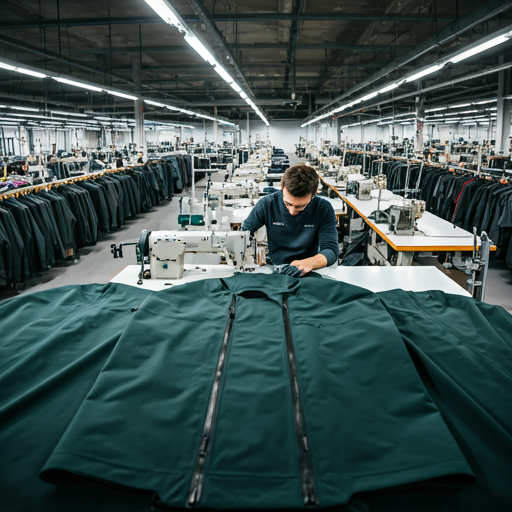
Same factory, same lines. Pants in this line are cut and sewn in our Sanmen facility (240 workers, running since 2013) on the same lines as our snow pants and softshell jackets, with the same PFC-free DWR from our mill. Sample lead time 7–10 days; bulk 25–35 days after deposit.
Yes. Wide or straight leg, diamond gusset, articulated knee and a low-profile waist that sits under a harness, on a 4-way stretch woven with no membrane. Send a reference garment or a photo of the fit and the leg width at knee and hem, and we pattern from that. MOQ is 10 pieces per style (mix colors and sizes).
Snow pants are insulated or shelled waterproof garments with taped seams, boot gaiters and scuff guards. The technical pant line is non-insulated and, for climbing, hiking and work programs, not waterproof: stretch woven or softshell with PFC-free DWR, patterned for movement on the ground. Several parts carry over — the articulated knee, the baggy-cargo block, zip thigh vents and Cordura reinforcement.
We can, but we will ask you first whether the program really needs it. A membrane on a hiking pant adds cost and cuts breathability. Most hiking programs are better served by a DWR stretch woven plus a separate packable rain pant. If the brief is a true rain pant, it moves to our laminate line with taped seams and is quoted as such.
It depends on the trade and the climate the crew works in, so we quote against your end use rather than a fixed number. Work trousers in this line use a heavier woven or bonded softshell face with Cordura or double-layer knees and a reinforced seat. Tell us the site standard for hi-vis or reflective trim, and we build to it.
Two. Each fit is its own pattern and its own design, so each carries a 10-piece MOQ. Colorways within one fit share the pattern and can be split across the 10 pieces by agreement. Plan the order by fit first, then colorway.
A single-piece sample is 7-10 days and costs $100, which is refunded in full against a first production order of 30+ pieces. Bulk production is 25-35 days after the deposit clears for a 30-200 piece run. A technical cargo built on our existing snowboard block is usually the fastest program to sample because the pattern already exists.
See real production quality first. 1-piece sample, $100 refundable on your first 30-piece order.
Request a Sample arrow_forwardPricing a specific run? Send your styles and quantities and get a per-unit quote at your volume.
Get an MOQ Quote arrow_forwardPrefer to talk first? Message the factory team on WhatsApp and book a call or live factory walkthrough.
Message on WhatsApp arrow_forwardReal production samples from our Sanmen factory. Every model: 10-piece MOQ, custom logo, 1-piece sample.
Tell us your spec. Our sales team will reply on WhatsApp within 12 hours.
Click the button below to open WhatsApp. If you're not logged in to WhatsApp Web yet, scan the QR code first — then come back here and copy the message into the chat.